Grief in a Coffee Cup: Processing the Loss When Your Favorite Shop Changes Hands
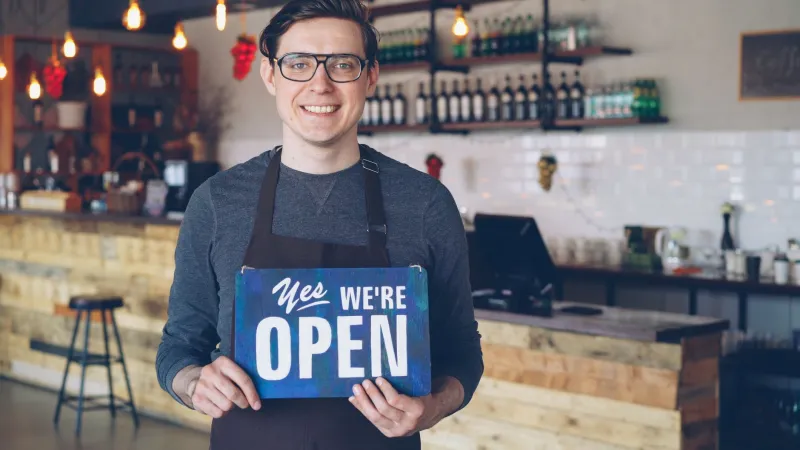
The sign appeared on a Tuesday. A single laminated sheet of paper, taped to the inside of the glass door at Groundwork, a scrappy 14-year-old coffee shop tucked into a strip of storefronts in Denver's Highlands neighborhood. The message was brief, warm, and devastating in the way that only understated news can be: Under new ownership. Exciting changes coming soon.
For Marisol Reyes, a graphic designer who'd been coming to Groundwork since her first week in the city, reading those words felt like arriving at a friend's house and finding strangers living there.
"I know it sounds dramatic," she said, laughing a little at herself. "But I literally stood there and cried. Not sobbed — just, like, quiet tears. I didn't even go in."
She's not alone in that reaction. Across the country, when independent coffee shops are acquired, rebranded, or shuttered altogether, the response from regulars frequently surprises even the people experiencing it. The grief is real, disproportionate by any rational measure, and almost universally accompanied by a sheepish acknowledgment that it's just a coffee shop.
Except, of course, it never is.
What You're Really Losing
The coffee was never just the coffee. That's the thing that becomes obvious only after the place is gone.
For years, the ritual of walking into a specific space — being recognized, ordering the same thing, occupying the same corner — creates something psychologists call a third place: a location that is neither home nor work but functions as a kind of social and emotional anchor. Ray Oldenburg, the sociologist who coined the term, argued that these spaces are essential to community wellbeing. They provide a sense of belonging that neither private life nor professional life can quite replicate.
Independent coffee shops are perhaps the most accessible third places in American life. They're low-cost, low-commitment, and often deeply personal in their character — shaped by the owners who built them, the staff who stayed, and the regulars who made them feel lived-in.
When that specific texture disappears, what replaces it is usually smoother, shinier, and completely hollow.
"The new place has better lighting and the espresso is technically more consistent," admitted Derek Okafor, a Portland attorney whose neighborhood shop was purchased by a regional chain two years ago. "But nobody knows my name anymore. I'm just a transaction. I didn't realize how much the other thing mattered until it was gone."
The Owner's Side of the Equation
For the people who built these places, the decision to sell is rarely simple — and often carries its own complicated grief.
Lena Cho ran a coffee shop in Nashville's East Side for eleven years before selling it in 2022. She'd built the place from a gutted laundromat into a genuine neighborhood institution, the kind of spot where people held first dates and job interviews and post-funeral gatherings without ever calling ahead.
"I loved that shop more than I can describe," she said. "But I was also exhausted in a way that was starting to scare me. The math just stopped working after the pandemic. I held on longer than I should have because I felt responsible — to the regulars, to my staff, to the neighborhood. But at some point you have to let yourself be a person, not just a symbol."
She sold to a buyer who promised to preserve the name and the spirit of the place. Within eight months, the menu had been overhauled, the staff turned over completely, and the hand-painted mural on the back wall had been painted over in a neutral gray.
"I don't go back," she said quietly. "I can't."
Why We Need Things to Stay
There's something worth sitting with in the intensity of this particular kind of loss. In a culture that celebrates disruption, pivoting, and the relentless pursuit of the new, our attachment to specific coffee shops reveals a quieter, more stubborn need: the need for something to remain.
We build our lives around rituals precisely because they create continuity. The Tuesday morning latte at the same table by the window isn't just caffeine delivery — it's a thread connecting who you were last Tuesday to who you are today. It's proof, in some small way, that you exist in relation to something stable.
When that thread snaps, the disorientation runs deeper than the inconvenience of finding a new spot.
"I think I was using that place to feel located," said Marisol, reflecting on her Groundwork grief months later. "Like, as long as it was there, I knew where I was in my life. When it changed, I had to figure out where I actually was without it."
That's not a small thing. That's the work.
Finding the Next Place — and What It Teaches You
The regulars who weather this loss and eventually find a new spot — not a replacement, but a new relationship — tend to describe the process as unexpectedly clarifying.
You realize what you actually valued. You become more deliberate about where you invest your loyalty. You show up differently, maybe, knowing now that nothing is permanent and that the ritual matters more than the room.
Derek found a new shop about six blocks further from his office than his old place. It takes him longer to get there. He goes anyway, every single morning.
"The owner remembers my name now," he said. "Took about two months. But it happened. And honestly, I think I appreciate it more this time around. I know it can end."
Maybe that's what these losses are really teaching us — not that places are fragile, but that we are capable of starting over. That the ritual survives the room. That the journey doesn't end when a favorite chapter closes.
The coffee shop may change hands. Your morning doesn't have to.