Chasing the Perfect Shot for the Camera and Losing Yourself in the Process
Let's be honest about the lavender oat milk latte.
Not whether it tastes good — it does, often — but about why you ordered it. Was it because something in your body was craving it? Because you'd been thinking about it all morning? Or because it showed up in your TikTok feed three times last week and looked incredible in a video shot in golden hour light by someone with 400,000 followers?
There's no judgment in the question. The honest answer, for a lot of us, is the third one. And that shift — from ordering based on what you want to ordering based on what the algorithm served you — is doing something subtle and worth examining to the way we experience coffee.
The Feed Has an Opinion About Your Order
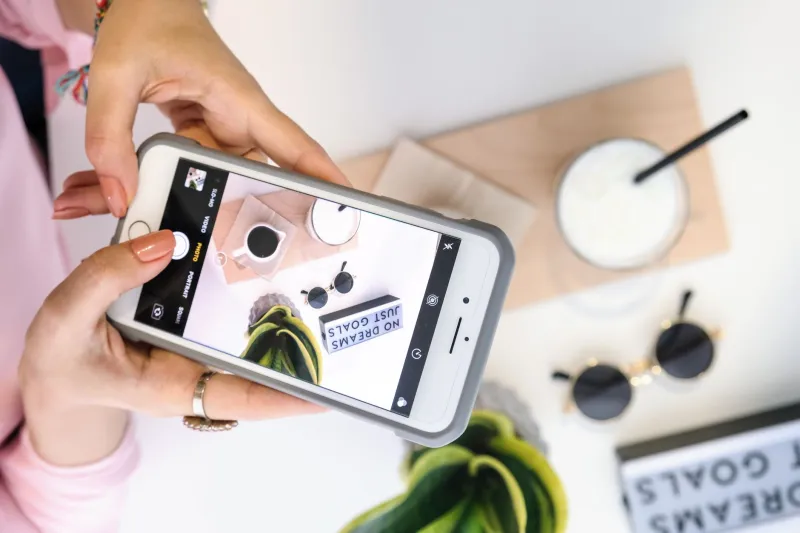
Instagram turned coffee aesthetic into a genre sometime around 2015. Latte art became a visual language. Flat lays featuring artisan beans and ceramic cups generated thousands of likes. The pour-over ritual became cinematic. None of that is inherently bad — coffee is genuinely beautiful, and sharing that beauty is a reasonable thing to do.
But TikTok accelerated something different. The platform's algorithm is extraordinarily good at identifying what you'll engage with and serving you more of it — and in the coffee space, that means a relentless stream of new drinks, new trends, new recipes, new limited-time offerings, and new viral orders to try before they disappear.
The Starbucks pink drink. The butter coffee era. The dalgona craze. The olive oil espresso. The brown sugar shaken oat milk situation. Each one arrives with a wave of content, peaks, and recedes, replaced by whatever comes next.
For people who genuinely love coffee, this is exciting. There's always something new to try, always another flavor profile to explore. But there's a cost embedded in the constant novelty — and it's a cost that's easy to miss because it's measured in something you never noticed you had.
What a Regular Actually Has
Being a regular at a coffee shop is not a trendy concept. It doesn't photograph well. There's no viral moment in walking into the same place for the four hundredth time and ordering the same medium drip with room for cream.
But something real accumulates in that repetition.
You learn your own preferences with unusual precision. You know exactly how that coffee hits on an empty stomach versus after breakfast. You know whether you want it hotter on cold mornings or whether the temperature doesn't actually matter to you. You build a relationship with the person who makes it — a small, genuine human connection that exists outside of your professional network and your social circle and your carefully curated online identity.
And perhaps most importantly, you create a ritual that belongs to you rather than to the content cycle.
"There's something really grounding about having a thing that's just yours," said Priya Nair, a marketing manager in Seattle who describes herself as a recovering coffee-trend chaser. "I spent like two years ordering whatever was going viral. And it was fun, but I never felt settled. I was always in consumer mode. It took me a while to realize I didn't actually know what I liked anymore."
The Pressure to Perform Curiosity
Social media coffee culture has created an interesting social pressure: the expectation that a serious coffee person is always exploring, always trying something new, always willing to post the evidence.
Ordering the same thing every day reads, in that context, as unsophisticated. Boring. The domain of people who haven't discovered what's out there.
But that framing inverts something important. Knowing exactly what you want — and wanting it reliably, without needing external validation — is not a limitation. It's a form of self-knowledge that takes time to develop and is genuinely worth having.
"I think we've confused the performance of curiosity with actual exploration," said David Cho, a barista and coffee educator based in Nashville. "Real exploration means sitting with something long enough to understand it. Ordering seventeen different drinks because they showed up in your feed isn't exploration. It's consumption. Those are different things."
He's not wrong. The depth of experience that comes from ordering the same single-origin pour-over every morning for six months — watching how it tastes different in different seasons, noticing how your palate shifts, developing a genuine opinion about it — is simply not available to the person who orders something different every visit based on what looked good online.
What the Algorithm Can't Give You
Here's what no amount of viral coffee content can replicate: the experience of walking into a place where someone already knows what you need.
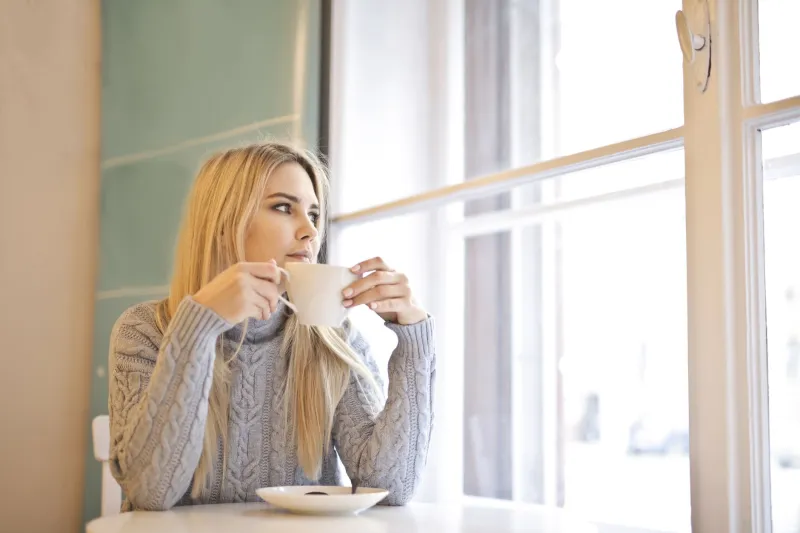
That moment — when the barista sees you coming and starts your order without a word, when you sit in the same chair and the noise of the world drops a few decibels, when the cup arrives and it's exactly right because it's always exactly right — is not available for purchase and cannot be photographed in a way that captures what it actually feels like.
It requires time. Consistency. The willingness to show up for the same thing over and over, even when the algorithm is suggesting you should be somewhere else trying something different.
None of that is photogenic. All of it is meaningful.
Finding Your Order in the Noise
This isn't an argument against trying new things. The coffee world is genuinely vast and endlessly interesting, and stumbling onto a new drink you love is one of life's small pleasures.
But there's a difference between discovering something new because you were curious and open, and ordering something new because the content cycle demanded it. One deepens your relationship with coffee. The other keeps you permanently on the surface of it.
Your caffeine destiny isn't written by an algorithm. It's written in the accumulation of mornings where you showed up, ordered your thing, and let the ritual do what rituals do — anchor you, center you, remind you of who you are when nobody's watching.
The feed doesn't know your order. But you do. That's worth protecting.