Drinking Alone, Drinking Together: Why the Same Cup Never Tastes Twice
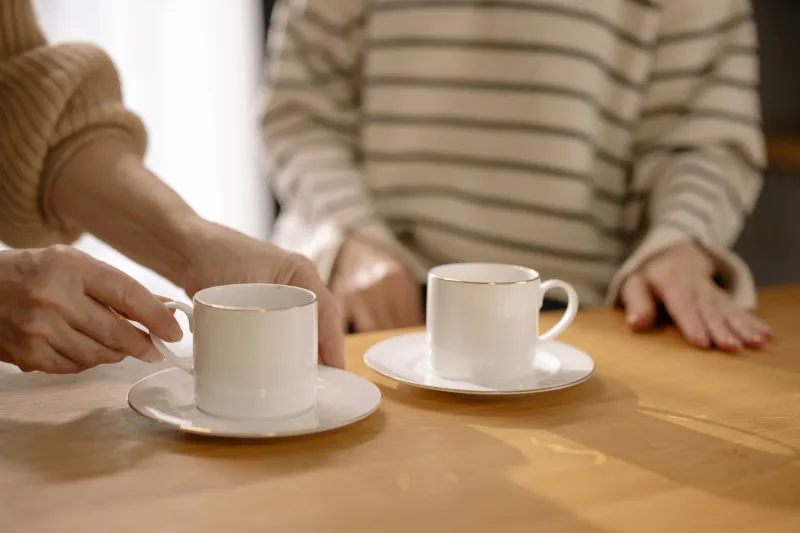
There's a specific kind of Saturday morning coffee. The kind you make before anyone else wakes up, when the house is still and the only sound is the kettle finding its boil. You take that first sip and something almost indescribable happens — the cup feels enormous, like it contains more than just coffee. Then there's the other kind: the mug pushed across the table toward a friend mid-conversation, the one you barely taste because you're laughing too hard. Same beans. Same grind. Completely different experience.
This isn't just poetry. There's real neuroscience happening inside that cup.
What Your Brain Is Actually Doing When You Sip
Flavor perception is a full-body event, not a tongue-only transaction. The olfactory system, memory centers, and emotional processing regions of the brain are all firing simultaneously every time you take a drink. And here's where it gets interesting: the social context you're sitting in actively shapes which of those neural pathways light up most.
Research in sensory psychology has consistently shown that shared consumption amplifies hedonic response — meaning things taste better, or at least more intensely pleasurable, when we experience them alongside other people. One frequently cited study out of the University of Chicago found that strangers who ate chocolate together rated it significantly more enjoyable than those who ate it alone, even when no words were exchanged. The mere presence of another person engaged in the same act appears to synchronize our emotional baseline and crank up the volume on positive sensory signals.
For coffee, a beverage already loaded with ritualistic and emotional weight, that amplification can be profound.
The Quiet Cup and What It Carries
But don't count out solitude just yet. Coffee drunk alone isn't lesser — it's different, and for a lot of enthusiasts, it's where the most nuanced tasting happens.
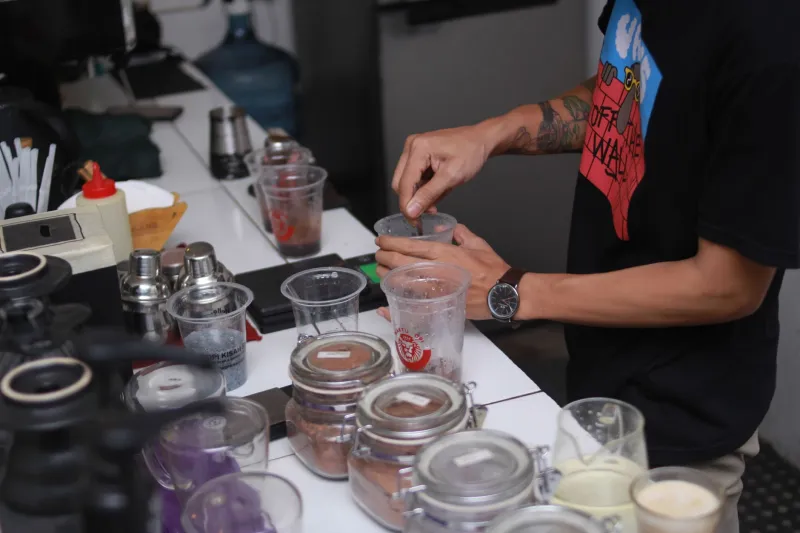
When you're alone with your cup, cognitive bandwidth opens up. You're not processing social cues, managing conversation, or splitting attention. That freed-up mental space often translates into heightened sensory awareness — you're more likely to notice the subtle brightness of an Ethiopian Yirgacheffe or the way a natural process coffee lingers on the back of the palate. Specialty coffee professionals will tell you that blind tasting and cupping sessions are almost always done in near-silence for exactly this reason.
There's also the emotional layer. Solo coffee has a particular intimacy with the self. It's the cup you drink during the hard morning after a rough night, the one that anchors you before a big decision, the quiet companion during grief or uncertainty. In those moments, the flavor takes a backseat to meaning. The coffee becomes less about taste and more about presence — yours, specifically.
When the Screen Gets Involved
The pandemic introduced a third category that nobody asked for and almost everyone adopted: the video call coffee. Zoom catch-ups, FaceTime mornings with a parent three time zones away, virtual happy hours that somehow migrated to 8 a.m. lattes. Sensory researchers found this experience genuinely fascinating — and a little melancholy.
Digital connection, it turns out, delivers the social expectation of shared consumption without the neurological payoff. You can see someone holding a mug. You can hear them describe their coffee. But your brain doesn't register the shared embodied experience the same way. The synchronization that happens when two people are physically present — the mirroring of gestures, the ambient sounds, the shared temperature of a room — simply doesn't translate through a screen.
Many people reported that coffee during video calls felt oddly hollow, even when the conversation was warm and meaningful. The cup was there. The connection was there. But something in the middle was missing. If you've ever hung up a video call and immediately felt lonelier than before you dialed, the coffee in your hand may have been telling you something true.
Companionship Rewrites the Recipe
Here's the part that still surprises people when they hear it: your expectations of a coffee experience, shaped entirely by who's in the room, can change what you physically perceive in the cup. This is the placebo effect's sophisticated cousin — context-dependent flavor modulation. If you're sharing coffee with someone whose taste you respect, research suggests you'll find the coffee more complex, more interesting. If you're drinking alone after a fight, the same brew can taste flat and thin.
Regular coffee drinkers describe this phenomenon all the time without realizing they're describing neuroscience. "That coffee at my friend's place always tastes better than when I make the same thing at home." "I can't enjoy a good pour-over if I'm stressed." "My morning cup on vacation tastes like a completely different drink."
It's not the water. It's not the altitude. It's you — your emotional state, your relational context, your nervous system's current setting.
Finding the Right Cup for the Right Moment
None of this means you need to optimize your social calendar around your coffee choices. But it's worth sitting with the idea that your daily cup is a more dynamic, responsive experience than most of us treat it as.
Drink alone when you want to actually taste something. When you've splurged on a single-origin bag or you're working through a new brewing method, give it the silence it deserves. Let your attention be the only thing in the cup.
Drink with people when you want to feel something. The coffee at your Sunday brunch with old friends isn't really about the coffee. It's about the synchronization, the shared warmth, the ancient human ritual of sitting together and consuming something together. That cup is doing a different job, and it's doing it beautifully.
And the next time a video call coffee leaves you feeling a little empty, cut yourself some slack. Your brain was expecting something your Wi-Fi couldn't deliver.
Every cup is a step on the journey — but who's walking beside you changes everything about how the path feels underfoot.