The Cup You Haven't Earned Yet: What Chasing Better Coffee Reveals About Your Ambitions

Photo by Photo by Syauqy Ayyash on Unsplash on Unsplash
Let me describe a scenario and see if it lands.
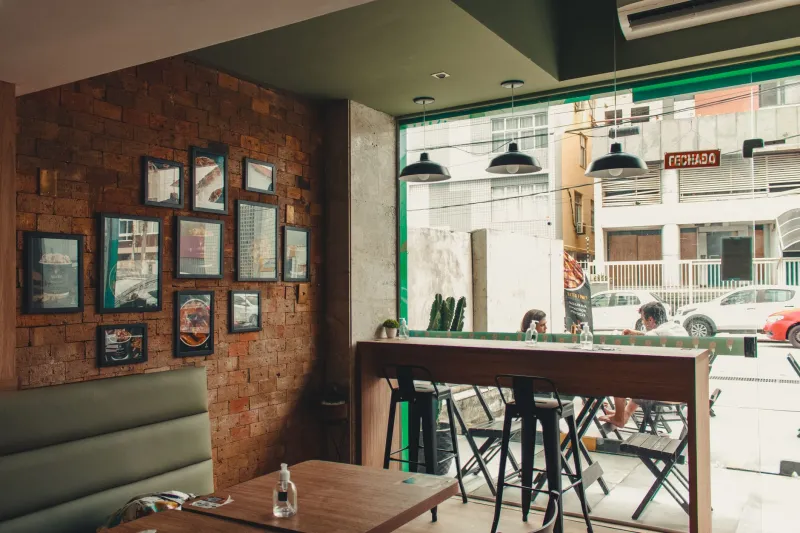
You're standing at the counter of a café that's a little nicer than your usual spot. The menu is handwritten on a chalkboard. There's a line item near the bottom — a single-origin pour-over, maybe, or a rare varietal you've heard about but never tried — and it costs $22. Or $30. Or $40 if you're in the right city and the bean had a particularly dramatic harvest story.
You look at it. You do the math in your head. You order the $6 drip and tell yourself you'll get the fancy one next time.
Now ask yourself: when is next time?
The Hierarchy Nobody Talks About
American coffee exists on a spectrum so wide it almost defies description. On one end, you've got the gas station cup — hot, functional, maybe 99 cents with a loyalty card. On the other, you've got the $40 Geisha pour-over at a specialty café, served with a written card explaining the farm's elevation and the specific honey-processing technique used on the beans. Most of us live somewhere in the middle, occasionally eyeing both ends with a complicated mix of practicality and aspiration.
What's interesting isn't the price difference. It's the psychology that lives in the gap.
The way you navigate that spectrum — whether you perpetually deny yourself the expensive cup, whether you splurge without guilt, whether you work your way up gradually and intentionally — is a pretty clean reflection of how you handle aspiration in the rest of your life. It's not a perfect metaphor. But it's a revealing one.
What the Entry-Level Cup Teaches You
Here's something the specialty coffee world doesn't always acknowledge: the $3 cup has dignity. The diner coffee, the bodega cup, the drip from the office machine — these aren't lesser experiences. They're a different kind of honest. They don't ask you to perform appreciation. They don't require you to have opinions about processing methods or altitude. They just do the job.
There's a version of ambition that starts exactly here — not by rejecting the entry-level option, but by understanding it completely. The people who eventually become the most thoughtful coffee drinkers often spent years with the basics before they started reaching for something more. That foundation matters. You can't really understand why a $30 cup tastes the way it does if you've never had the $3 version it's being compared against.
In the same way, you can't fully appreciate what you're climbing toward if you've never been honest about where you started. Ambition without that grounding tends to be hollow — all aspiration, no context.
The Treat Yourself Trap
At some point in the specialty coffee journey, most people encounter what I'd call the Treat Yourself Trap. It goes like this: you discover that expensive coffee can be genuinely, revelatorily better than what you've been drinking. You have a cup that changes your understanding of what coffee can be. And then you spend the next several months telling yourself you'll have that experience again — as a treat, as a reward, as a someday thing — while continuing to default to the cheaper, safer option.
This pattern shows up everywhere in adult life, not just in coffee. The restaurant you save for a special occasion that never quite arrives. The piece of clothing you want but don't feel like you've earned. The experience you keep placing just out of reach because spending money on yourself requires justification and the justification never feels quite sufficient.
The coffee version is useful precisely because it's low-stakes enough to examine honestly. A $25 cup of coffee is not a major financial decision. But if you can't let yourself have it without a complicated internal negotiation — without feeling like you need to have accomplished something first — that pattern is worth noticing. What are you waiting to earn? And who decided you hadn't earned it yet?
The Pursuit as the Point
Some people approach specialty coffee the way others approach wine or whiskey: as a long, deliberate education. They start with accessible options, read about what they're tasting, gradually expose themselves to more complex and expensive experiences, and let their palate develop at its own pace. They're not in a hurry to reach the top of the hierarchy. The journey up the ladder is the point.
This is, I'd argue, the healthiest relationship with ambition — in coffee and in life. The goal isn't to arrive at the most expensive option as quickly as possible. It's to actually understand and appreciate each step along the way. The person who skips straight to the $40 pour-over without the context to appreciate it isn't having a better experience than the person who spent two years working up to it. They're just spending more money.
Real ambition isn't about the destination you can afford to buy. It's about the person you're becoming in the process of working toward it.
When You Finally Order the Expensive Cup
There's a specific kind of satisfaction that comes from ordering the coffee you've been eyeing for months and finding out it's worth it. Not just because of the taste — though the taste matters — but because of what it confirms. That your palate has developed enough to actually appreciate it. That you've done the reading, had the conversations, built the context. That you're not just spending money — you're spending it well, on something you genuinely understand and wanted.
That's a feeling that scales. It's the same feeling as landing the job you worked toward for three years, or finishing the project you thought might be beyond you, or moving into the apartment you once could only walk past and admire. The specific object — the coffee, the job, the apartment — matters less than what your ability to access it says about how far you've come.
What Your Coffee Budget Is Actually Telling You
I'm not suggesting you need to spend more on coffee. Plenty of people have rich, meaningful coffee rituals built entirely around affordable options, and that's completely legitimate. The price of your cup isn't a measure of your worth or your sophistication.
But if there's a cup you want and keep not ordering — if there's a version of your coffee life you keep deferring — it's worth asking why. Not to guilt yourself into spending money you don't have. But to get honest about whether the barrier is financial or psychological. Whether you're being practical or whether you've decided, somewhere along the way, that the better version isn't for you.
Because here's the thing about your caffeine destiny: it doesn't have a waiting room. The journey toward your ideal cup — whatever that looks like, at whatever price point — is already happening. Every cup you choose, or don't choose, is part of it.
The only question is whether you're choosing consciously.