Sip the Map: A Playful Tour of America's Most Iconic Regional Coffee Drinks
Sip the Map: A Playful Tour of America's Most Iconic Regional Coffee Drinks
Ask someone from Seattle to describe a good cup of coffee and they'll talk about single-origin sourcing and extraction ratios. Ask someone from Boston and they'll say "large iced, extra extra" like it's a personality trait — because it is. Ask someone from New Orleans and they might just slide a cup of café au lait across the table and let you figure it out for yourself.
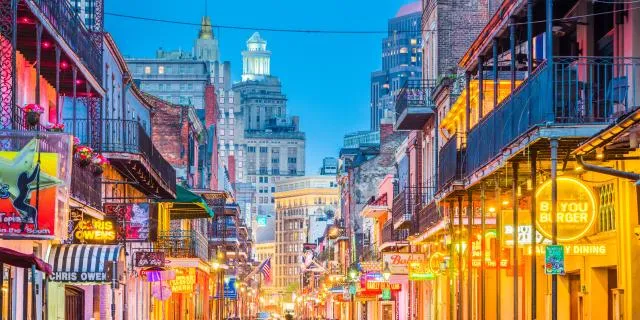 Photo: New Orleans, via cdn.lazytrips.com
Here's the thing about American coffee culture that doesn't get enough credit: it isn't one thing. It never was. Long before third-wave roasters started printing tasting notes on kraft paper bags, different corners of this country were developing their own deeply specific relationships with the bean — shaped by history, climate, immigration patterns, and a healthy dose of regional stubbornness.
So consider this your coast-to-coast coffee passport. We're ranking, celebrating, and lightly roasting (pun absolutely intended) the most iconic regional coffee traditions in America. No wrong answers. Plenty of opinions. Let's go.
New Orleans: The Chicory Classic That Started It All
The drink: Café au lait with chicory
If American regional coffee had a founding father, it would wear a seersucker suit and smell faintly of beignets. New Orleans' café au lait — equal parts dark-roasted chicory coffee and scalded whole milk, served in a wide ceramic cup — is one of the oldest and most distinctive coffee traditions on the continent.
The chicory part has a story. During the Civil War, coffee shortages pushed Louisiana residents to stretch their supply by blending in roasted chicory root, which adds a woody, slightly bitter depth that's unlike anything else in the American cup. The practice stuck. Hard. Today, a café au lait at the legendary Café Du Monde in the French Quarter — open since 1862, perpetually crowded, perpetually worth it — remains one of the most transportive sips in the country.
 Photo: Café Du Monde, via pagina.de
New Orleans coffee doesn't ask you to appreciate its complexity. It just sits down next to you and starts talking. Ranking: First, always, for sheer historical weight.
The Pacific Northwest: Where Espresso Is a Belief System
The drink: The single-origin pour-over or a carefully pulled double shot
Seattle didn't just give us Starbucks (though it did, and the world has strong feelings about that). It gave us the template for American specialty coffee culture — the idea that where a bean comes from matters, that roast profiles deserve discussion, that the person making your drink is a craftsperson, not just an order-taker.
Walk into a serious Seattle café — Victrola, Lighthouse, Slate — and the vibe is somewhere between a library and a laboratory. People are focused. The equipment is expensive. The menu has a lot of words on it. And the coffee? Genuinely excellent, in ways that reward attention.
Portland takes the same philosophy and adds a layer of approachability — Stumptown helped pioneer that balance — while also leaning into cold brew and nitro options with the enthusiasm of a region that gets more gray days than it knows what to do with.
The Pacific Northwest made coffee into a cause. Whether you find that inspiring or a little exhausting probably says something about you. Ranking: Second, for cultural influence that reshaped the entire country.
New England: The Iced Coffee Loyalists Who Never Wavered
The drink: Large iced coffee, cream and sugar (and yes, in winter)
The rest of America was still treating iced coffee as a seasonal novelty when New England was ordering it in February without a trace of irony. Dunkin' — forever Dunkin', no matter what the rebranding says — built its empire on this truth: some people just want a cold, sweet, caffeinated drink, and they want it fast, and they want it to taste the same every single time.
New England's coffee identity is proudly unpretentious. It's the anti-third-wave. Nobody in a Worcester Dunkin' drive-through is asking about the bean's altitude. They're asking for an "extra extra" — New England shorthand for extra cream, extra sugar — and they mean it as a life philosophy.
This is coffee as comfort, as routine, as regional solidarity. And there's something genuinely beautiful about a tradition that's this unashamed of what it is. Ranking: Third, with deep respect for its zero-pretension energy.
The South: Sweet Tea's Caffeinated Cousin
The drink: Sweet iced coffee, often from a drive-through
The South has long had a complicated relationship with hot coffee — when it's 95 degrees and humid enough to swim through, the appeal of a steaming mug is admittedly limited. What the South does exceptionally well is cold, sweet, and abundant.
Drive-through coffee culture thrives here in a way that feels distinct from anywhere else. Chains like PJ's Coffee (a New Orleans original that's expanded across the Gulf Coast) and Dutch Bros (which has pushed east from its Oregon roots) have found enthusiastic Southern audiences. Meanwhile, homegrown spots in cities like Nashville, Atlanta, and Charleston are blending Southern hospitality with serious coffee craft in ways that are genuinely exciting.
The South's coffee identity is still evolving, which might actually make it the most interesting chapter being written right now. Ranking: Fourth, but climbing fast.
The Midwest: The Diner Cup That Deserves More Credit
The drink: A good, honest diner coffee — light roast, bottomless, in a ceramic mug
Hear us out. The bottomless diner coffee of the Midwest — light, bright, unpretentious, served in a mug that's been through things — is one of the most underrated coffee experiences in America. It's not trying to be anything other than what it is: a warm, reliable, infinitely refillable companion to a plate of eggs and a long conversation.
In an era of $8 lattes and single-serve pour-overs, there's something almost radical about a cup of coffee that costs $2 and never runs out. Minnesota, Wisconsin, and Iowa have kept this tradition alive with zero apology, and we're grateful. Ranking: Fifth, but with a special award for Most Comforting.
California: The Innovator That Can't Stop Reinventing the Cup
The drink: Whatever's new — oat milk cortado, adaptogen latte, flash-chilled single-origin*
California doesn't have one coffee identity. It has seventeen, and it's working on three more. From the Blue Bottle-influenced precision of San Francisco's café scene to the sun-drenched, plant-milk-forward culture of Los Angeles, California is where American coffee trends are born, sometimes before anyone's quite sure they're trends.
The California coffee drinker is adventurous, health-conscious, and mildly exhausting in the best possible way. They'll try anything once, and if it's good, they'll demand it everywhere until it becomes mainstream. Nitro cold brew? California helped. Oat milk dominance? Largely California's doing. Whatever comes next? Check the menus in Silver Lake.
Ranking: Sixth in tradition, first in whatever's happening next.
Your Cup, Your Coordinates
Here at Caffeine Destiny, we believe your coffee ritual is part of your story — and your regional coffee identity is part of that story too. The cup you grew up with, the one that tastes like home, the one you defend a little too passionately at parties — that's not just a preference. It's a coordinate on the map of who you are.
So whether you're a chicory loyalist, an extra-extra devotee, or someone who can explain the difference between a washed and natural process Ethiopian bean with alarming ease — your cup belongs on this map.
Now tell us: which region got robbed?