When You Put Down the Cup for Good: The Unexpected Wisdom of Quitting Coffee
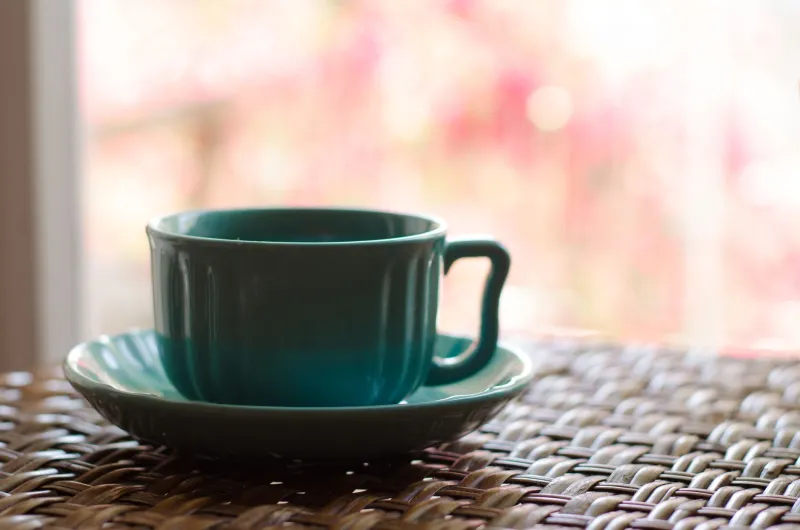
There's a specific kind of quiet that settles over a morning when the coffee maker stays cold. No grinder whirring. No slow bloom of dark liquid filling the carafe. Just you, the kitchen, and a silence that feels almost accusatory.
Most people who decide to cut back — or quit entirely — frame it as a health move. Less anxiety. Better sleep. Breaking the caffeine dependency cycle. And sure, all of that is real. But underneath those practical reasons lives something far more interesting: a confrontation with identity. Because for a lot of us, coffee isn't just a beverage. It's a ritual, a personality trait, a shorthand for who we are. And when you decide to walk away from it, you're not just changing your morning. You're asking a harder question.
Who am I without this?
The Thing We Don't Admit About Our Rituals
Here's what nobody says out loud in the coffee world: sometimes a ritual stops serving you, and you keep doing it anyway. Not because it's working, but because it's familiar. Because it's yours.
We talk a lot on this site about the meaning embedded in your morning cup — the warmth of it, the pause it creates, the way a good brew can feel like a small act of self-care before the world gets loud. And we mean every word of that. But the flip side of a meaningful ritual is the danger of clinging to it past its expiration date. Of mistaking comfort for nourishment.
Some people reach for coffee the way they reach for an old story about themselves — I'm the person who needs this to function — and they repeat that story so many times it becomes load-bearing. Take it away, and suddenly you're not sure what's holding up the ceiling.
That's not a caffeine problem. That's a self-awareness problem. And quitting coffee, at its most honest, forces you to look directly at it.
The Detox Is Never Really About the Caffeine
Anyone who has gone through a caffeine withdrawal will tell you it's unpleasant in a strangely disproportionate way. The headaches make sense — your blood vessels are adjusting, your adenosine receptors recalibrating. But the emotional flatness that often comes with it? The low-grade grief? That part's harder to explain biochemically.
Because you're not just missing caffeine. You're mourning a ritual. You're sitting with the absence of something that marked time in your day, that signaled this is where you begin. And in that absence, you start to notice how much weight you'd placed on it.
People who quit smoking describe something similar — not just the physical craving, but the loss of a social anchor, a punctuation mark in the workday, an identity. I was a smoker. Now what? Coffee carries its own version of that weight, gentler but real. Especially in a culture where your order has become a form of self-expression, where the third-wave coffee scene has made enthusiasts out of casual drinkers and philosophers out of enthusiasts.
Walking away from that is its own kind of pivot.
What You Find on the Other Side of the Habit
Here's the part that surprises most people: after the headaches fade and the fog lifts, a lot of folks describe a strange clarity. Not the jittery alertness of a double espresso, but something quieter and more sustainable. A baseline they hadn't felt in years.
And with that clarity comes information.
Some people realize they were using coffee to paper over fatigue that was actually a signal — from their body, their schedule, their emotional state — that something needed to change. The caffeine was competent enough at muffling that signal that they never had to listen to it. Quitting forced them to hear it.
Others discover that the ritual they loved wasn't really about the coffee at all. It was about the pause. The permission to sit still for five minutes before the day demanded something from them. Once they understood that, they found other ways to create that pause — a walk, a glass of water in a good mug, ten minutes of actual quiet — and the ritual survived the substance.
That's a genuinely useful piece of self-knowledge. And you only get it by letting go.
Endings as a Form of Becoming
We tend to frame reinvention as addition. You pick up a new habit, a new practice, a new perspective. You become more. But some of the most significant growth comes from subtraction — from the deliberate removal of something that was taking up space you didn't realize you needed.
Quitting coffee, for the people who do it thoughtfully, is rarely just about coffee. It's a test run for a harder question: Can I identify what I'm holding onto out of habit versus what's actually serving me? That's a question worth asking about a lot of things — relationships, career paths, belief systems, self-narratives that stopped being true years ago.
The cup is just a useful entry point.
Because it's low-stakes enough to actually try. And concrete enough to teach you something real.
A Note for Those Who Stay
None of this is a case against coffee. Not even a little bit. The ritual, when it's working, is genuinely worth something — the mindfulness it creates, the pleasure of a well-made cup, the way it anchors a morning and makes the day feel intentional. We believe that here, and we mean it.
But the ritual is only as good as the awareness you bring to it. If you're drinking coffee on autopilot, reaching for it out of anxiety or obligation rather than genuine enjoyment, it might be worth asking what the cup is actually doing for you. Not to quit — but to choose. Consciously. The way you'd choose anything that matters.
There's a difference between a ritual that serves you and a habit that runs you. The line between them is easier to see once you've sat with the absence, even briefly.
The Last Cup Is Never Really the Last Thing
For those who do decide to walk away — whether permanently or just for a season — there's something worth honoring in that last cup. The deliberate goodbye. The acknowledgment that something that mattered is ending, and that endings are allowed to be meaningful.
Your caffeine destiny, it turns out, isn't just about what you drink. It's about what you learn from every choice you make along the way — including the choice to stop.
Some journeys lead you toward something. Some lead you away. Both kinds count.