What You're Drinking When Everything Changes: The Hidden Language of Your Crossroads Cup

What You're Drinking When Everything Changes: The Hidden Language of Your Crossroads Cup
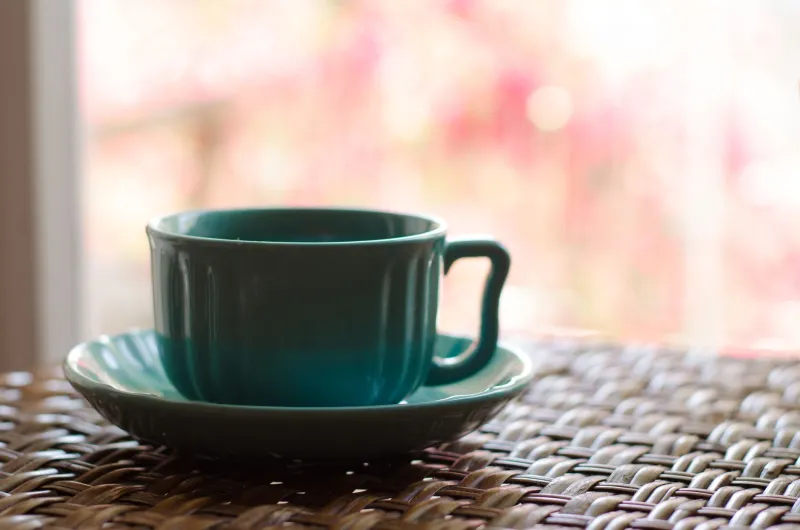
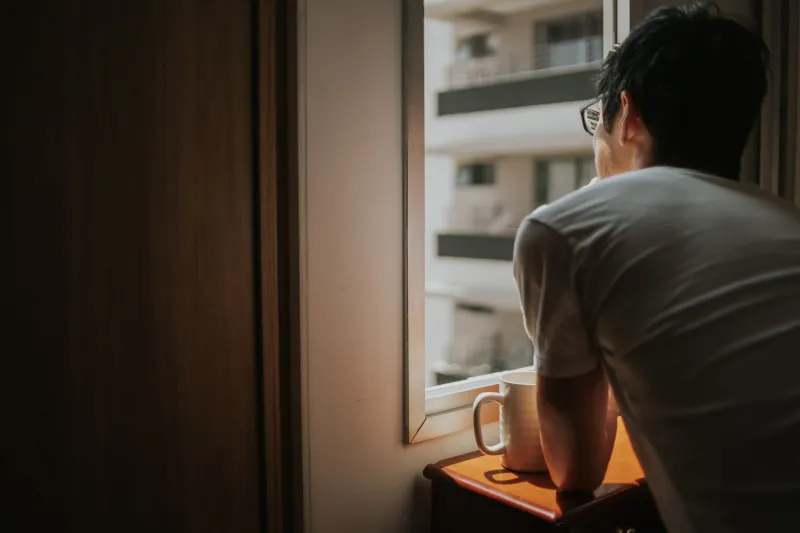
There's a moment most of us have lived through — sitting at a kitchen table, or hunched over a coffee shop corner seat, holding something warm between both palms while the rest of your life quietly rearranges itself around you. Maybe it was a resignation letter sitting open on your laptop. Maybe it was a phone call you weren't ready to make. Maybe it was just the specific, heavy silence of knowing something was about to be different forever.
And in that moment, without really thinking about it, you made yourself a cup of something.
The question worth asking — and the one we don't ask often enough — is why that cup, and why then?
The Comfort Mechanism Nobody Talks About
Behavioral scientists have long studied the relationship between ritual and stress regulation. When anxiety spikes, humans instinctively reach for predictable sensory experiences — things that feel familiar, warm, and within our control. Coffee, for millions of Americans, sits squarely at the center of that impulse.
Dr. Juliet Zhu, a consumer psychologist whose work has examined how physical sensations influence emotional states, has noted that warmth — literal, tactile warmth — triggers associations with social connection and psychological safety. Holding a hot mug isn't just a habit. It's a nervous system reset, a small act of self-anchoring when the ground feels unsteady.
 Photo: Dr. Juliet Zhu, via wallpapers.com
But here's where it gets interesting: it's not just that people reach for coffee during big moments. It's which coffee they reach for. And that choice, often made on pure instinct, can reveal a surprising amount about where you are emotionally.
The Breakup Latte and Other Emotional Archetypes
Think back to your last major life disruption — a move, a split, a career pivot, a loss. What were you drinking?
Anecdotally, there's a pattern worth noticing. People navigating grief or heartbreak often migrate toward milky, sweet, heavily modified drinks — a vanilla latte, a mocha, something that softens the edges. The coffee is almost beside the point; it's the sweetness and the texture that matter. It's comfort dressed up as caffeine.
Contrast that with the person who just accepted a terrifying new opportunity. They're often drinking something sharp and direct — a straight espresso, a black pour-over, something with a clean finish and no fuss. There's a kind of declarative energy in that choice, a subconscious alignment with the version of themselves they're trying to step into.
And then there's the in-between state — the crossroads proper, where you genuinely don't know which way you're going yet. That's the Americano drinker, the person who orders a drip coffee with room. Something familiar, something that doesn't ask too much of you, something you can hold onto while you figure out the rest.
None of this is scientifically rigid. But it's worth sitting with.
Why Ritual Matters More at the Edges
Ordinary Tuesdays don't require much from our rituals. We make coffee on autopilot, drink it while scrolling, and move on. The ritual is background noise.
But at the edges of life — when the stakes are real and the future is genuinely uncertain — ritual steps forward. It becomes load-bearing. The act of making something, of going through the motions of grinding, brewing, waiting, becomes a way of telling your nervous system that some things are still within your control, even when the big things aren't.
This is why so many people describe making coffee as grounding. Not metaphorically grounding — literally grounding. The physical process of it, the sensory feedback, the small sequence of decisions that lead to a predictable outcome. In the middle of chaos, a reliable cup of coffee is a tiny proof that cause and effect still works.
That's not a small thing. That's actually kind of profound.
Your Own Crossroads Cup: A Prompt Worth Sitting With
Here's an exercise that sounds simple but tends to surface something real: think back through the last five years and identify two or three moments where your life genuinely changed direction. A decision made, a door closed, a new path chosen.
Now ask yourself — what were you drinking?
Not because the answer will unlock some cosmic truth, but because the act of remembering tends to bring the emotional texture of those moments back. And often, the coffee you were holding is woven into that texture in ways you didn't consciously register at the time.
Some people find they always make the same thing when they're scared. Others notice they switched drinks entirely when they were trying to reinvent themselves — as if changing the cup was a small, private declaration of change. A few people realize they stopped making coffee at home during their hardest periods and started going out for it instead, craving the ambient warmth of other humans nearby.
All of it means something. None of it is trivial.
The Cup as a Mirror
There's a reason Caffeine Destiny exists as a concept — because coffee isn't just a beverage, it's a companion to the journey. And journeys have turning points. They have moments where you stop and look around and realize the landscape has shifted.
At those moments, you're probably holding something hot.
The next time you find yourself at a real crossroads — not the manufactured drama of an ordinary week, but a genuine, weight-of-it moment — pay attention to what you make. Pay attention to whether you brew it slowly or grab something fast. Whether you want it sweet or stark. Whether you drink it alone or need to be around people.
Your crossroads cup won't make the decision for you. But it might tell you something about who you already are — and maybe who you're becoming. And on the days when everything feels uncertain, that's not nothing.
That might actually be everything.