The Booth That Remembers You: What Happens When You Walk Back Into a Coffee Shop From Your Past
The Door Swings Open on More Than Just a Café
You recognize the smell before you even cross the threshold. Roasted beans, a faint trace of cinnamon, maybe the ghost of a cleaning product they've been using for years. Your body knows this place even if your life has completely rearranged itself since the last time you sat down here.
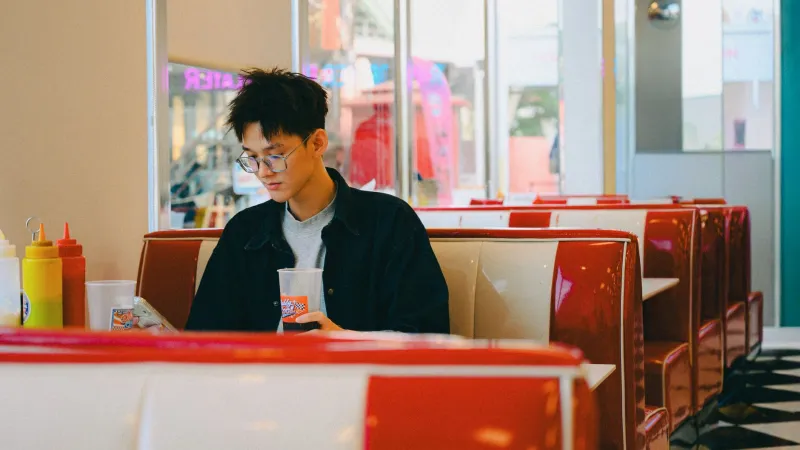
Maybe it's the café two blocks from your old college campus where you pulled all-nighters fueled by drip coffee and existential dread. Maybe it's the corner spot where you sat across from someone who eventually broke your heart, both of you nursing lattes and pretending everything was fine. Or maybe it's just the unremarkable strip-mall coffee shop near your first real job — the one where you rehearsed presentations under your breath and checked your email with the anxious energy of someone who hadn't yet learned that most things could wait.
Whatever the address, walking back in isn't just nostalgia. It's something stranger and more useful than that.
Spaces Hold What We Left Behind
Environmental psychologists have a term for it: place attachment. It's the emotional bond we form with physical locations, and it runs deeper than most of us realize. Our brains encode memories not just as events but as environments — the lighting, the ambient noise, the particular angle of afternoon sun through a window. When you return to a place tied to an emotional chapter, those stored details come flooding back with a vividness that a photograph simply can't replicate.
Coffee shops are especially potent containers for this kind of memory. They're transitional spaces by nature — places where people go between one thing and the next, where decisions get made, where feelings get processed over something warm. You weren't just drinking coffee in that booth. You were figuring out who you were, what you wanted, whether you were brave enough to go after it.
That's a lot to carry in a corner seat.
The Cup Tastes Different Now — And That's the Point
Here's the thing nobody warns you about when you walk back into an old haunt: everything looks smaller. The ceilings seem lower. The tables are closer together than you remembered. The walk from the door to your usual spot is somehow shorter than it was in your memory, where it had the dramatic length of a significant journey.
This isn't a trick of architecture. It's a trick of perspective. You've grown, and the space hasn't.
There's something quietly profound about that. When you were last a regular here, this place held the whole weight of your world. Now you can see the whole room from the doorway. That's not disappointment — that's evidence. Evidence that the world you were so anxious about navigating has, in fact, been navigated. That the problems that felt enormous were, eventually, manageable. That you moved through them and came out the other side.
Order your coffee. Sit down. Let that sink in.
What the Barista Doesn't Know About You
One of the stranger parts of returning to an old coffee shop is the asymmetry of it all. The space remembers you — or at least, your nervous system insists it does — but the barista behind the counter has no idea. They're making your drink like it's any other Tuesday. They don't know that the last time someone handed you a cup in this room, you were a completely different version of yourself.
And that's oddly freeing.
You don't have to perform the person you used to be. You don't have to explain the gap between then and now. You can just sit with both versions of yourself — the one who used to come here and the one who came back — and notice what's changed without having to narrate it for anyone else.
This is one of the quiet gifts that coffee shops offer: anonymity inside familiarity. You can be a stranger in a place that once knew you well, and that strange combination creates a kind of emotional breathing room you didn't know you needed.
The Progress Report You Never Scheduled
We spend a lot of time measuring progress in obvious ways — job titles, relationships, zip codes, the number of digits in a bank account. But some of the most honest progress reports come from the unexpected moments. Standing in a place that once defined a hard season and realizing, with a start, that you're okay. More than okay.
Maybe you come back to your college-town café and the anxiety that used to live in your chest while you studied here is just... quiet. Maybe you sit in the booth where a difficult relationship finally unraveled and find that the grief you expected to feel has mostly softened into something that looks a lot like gratitude. Maybe you order the same drink you always ordered at your first job's coffee shop and notice that your hands aren't shaking anymore when you check your phone.
Those are the kinds of measurements that don't show up on a resume, but they matter enormously.
Nostalgia Isn't the Enemy — Stagnation Is
There's a tendency to treat nostalgia with suspicion, as if looking back means you're not moving forward. But revisiting an old haunt isn't about wanting to go back. It's about understanding how far you've traveled from a fixed point on the map.
You need a fixed point for that kind of reckoning. A coffee shop that hasn't changed much, in a neighborhood that still smells the same, serving a drink that tastes close enough to what you remember — that's your fixed point. You're the variable. And sometimes, standing in the same spot where you once felt lost or scared or uncertain, you get to feel the full weight of what you've figured out since then.
That's not nostalgia. That's orientation.
Go Back. Order Something.
If there's a coffee shop somewhere in your past that you've been avoiding or simply haven't gotten around to revisiting, consider this a gentle nudge. Not to relive anything, not to chase a feeling, but to see what it shows you.
The cup will taste a little different. The room will feel a little smaller. And somewhere between the first sip and the last, you might catch a glimpse of how far you've actually come — not in spite of everything that happened in that booth, but because of it.
Your journey didn't start here. But somewhere along the way, this place was part of it. And coming back, even once, has a way of reminding you that you're still moving forward — one cup at a time.