Where You Sit Is Who You Are: The Unspoken Psychology of Coffee Shop Seating
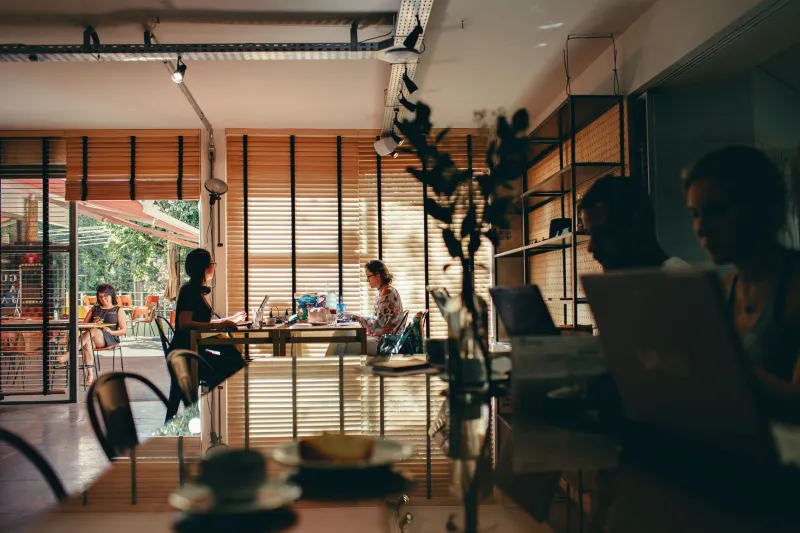
You walk in, scan the room in about three seconds flat, and make a decision that feels completely automatic. Window or wall? Corner or center? Near the door or buried deep in the back? You probably don't give it a second thought. But the baristas definitely do.
"I've been watching people choose seats for six years," says Marcus, a lead barista at a specialty shop in Portland, Oregon. "And I'm telling you — where someone sits tells me more about them than their drink order does. The drink order is a mood. The seat is a personality."
 Photo: Portland, Oregon, via www.culturefrontier.com
He's not wrong. There's an entire unspoken social choreography happening inside every coffee shop in America, every single day. And once you start seeing it, you genuinely cannot stop.
The Power Outlet Hunters
Let's start with the most transparent archetype in the room: the outlet seeker. You know them. They walk in with a laptop bag already half-unzipped, eyes scanning the baseboards before they've even looked at the menu. They will pass up a perfectly good table by the window — good lighting, comfortable chair, nice view — for a slightly wobbly stool crammed next to a power strip behind the espresso bar.
This person is not here for ambiance. They are here to work, and the coffee shop is simply a more tolerable version of their home office or their actual office. Productivity is the destination; caffeine is the fuel.
Psychologists who study environmental behavior call this "instrumental place attachment" — the idea that some people relate to a space entirely through what it allows them to accomplish. The outlet hunter isn't romanticizing the coffee shop. They're using it. And honestly? There's a clarity to that you have to respect.
The Window Philosophers
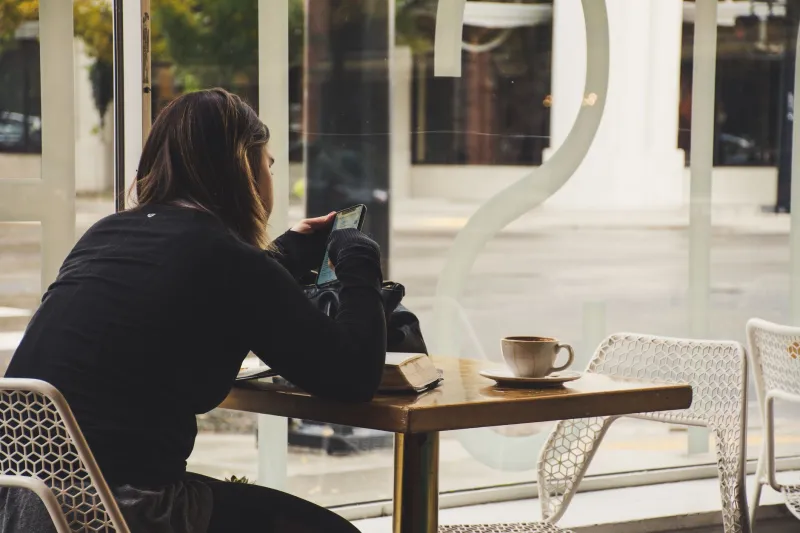
At the opposite end of the spectrum, you have the window-seat people. These are the ones who arrive early enough to claim the good real estate, set down a single notebook or a worn paperback, and spend the next ninety minutes watching the street like it owes them something.
Jamila, a regular at a neighborhood café in Nashville, has sat in the same window seat every Saturday morning for three years. "I don't really know why I need to see outside," she admits. "I just feel more like myself there. Like I'm part of something bigger than just my coffee."
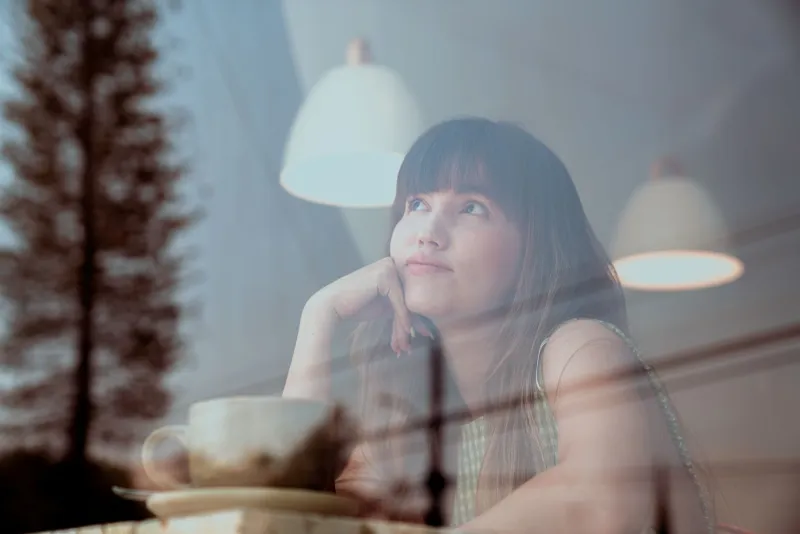
That feeling has a name. Environmental psychologists call it "prospect" — the human instinct to seek positions with a wide view, a holdover from our ancestors who needed to see threats coming from a distance. But in a modern coffee shop context, it's less about survival and more about a specific kind of introspection. Window-seat people tend to be observers. Thinkers. People who are processing something — a decision, a transition, a feeling they haven't named yet.
If you're a window-seat regular, ask yourself honestly: what are you watching for?
The Corner Strategists
Then there are the corner people. Back to the wall, full view of the room, positioned so nobody can approach from behind. This is the "don Corleone" of coffee shop seating, and it's more common than you might think.
These folks aren't necessarily paranoid. Often, they're just deeply aware of their surroundings and find open, exposed seating genuinely uncomfortable. Introverts skew heavily toward corners, but so do people going through periods of heightened anxiety or major life change. The corner offers containment. It says: I can see everything, and I am in control of how much of myself I offer to this room.
Rachel, a barista in Chicago's Wicker Park neighborhood, has noticed a pattern. "The corner regulars are usually the ones going through something," she says. "A breakup, a job change, a move. They come in every day for a few weeks, always the same corner, and then one day they sit somewhere else. That's usually when I know they're okay again."
 Photo: Wicker Park, via i.ytimg.com
The Center-Table Confidence Move
If corners are about protection, center tables are about projection. Sitting in the middle of a busy coffee shop — no wall support, visible from every angle — requires a particular kind of ease with being seen. These are often the networkers, the extroverts, the people who find ambient social energy genuinely energizing rather than draining.
But center-table sitters can also be people who are deliberately practicing something. Maybe they're working through social anxiety. Maybe they just moved to a new city and are trying to feel less invisible. The center table is a declaration, even a quiet one: I am here. I take up space. That's okay.
The Bar-Seat Loners (Who Aren't Actually Lonely)
A special mention goes to the bar-seat regulars — the people who pull up to a long counter, usually facing a wall or a window, and settle in with a kind of monastic focus. These are solo travelers by temperament. They want proximity to other people without the obligation of engagement. They're not lonely; they're calibrated.
"Bar-seat people are my favorites," Marcus says. "They're the most self-aware people in the room. They know exactly what they need and they take it without apology."
There's something genuinely admirable about that.
The Question Worth Asking Yourself
Here's where Caffeine Destiny gets a little philosophical with you, because that's kind of what we do.
The seat you always choose isn't random. It's a habit, and habits are just old decisions that stopped being decisions. At some point in your life, something made that spot feel right — maybe you needed the outlet, or the view, or the wall at your back — and your body just kept returning to it.
But people change. Circumstances change. The seat that protected you during a hard season might be keeping you small in a new one. The corner that felt safe when you were rebuilding might now be a way of hiding from a room that's actually ready to welcome you.
Next time you walk into your regular spot, pause for just a second before you autopilot to your usual table. Look around. Notice what pulls you. Notice what you're avoiding.
Then sit wherever feels true — not just familiar.
Your coffee will taste exactly the same. But the view might tell you something you needed to hear.