My Corner Table Has a Better Attendance Record Than I Ever Did at the Office
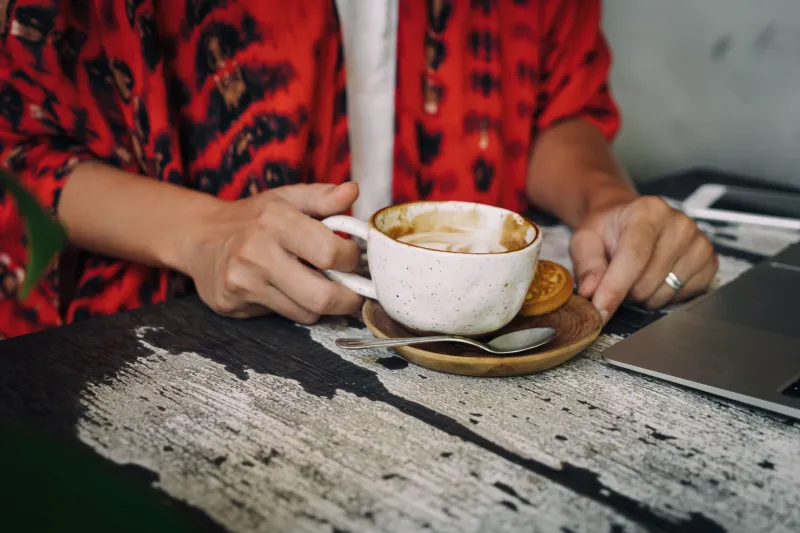
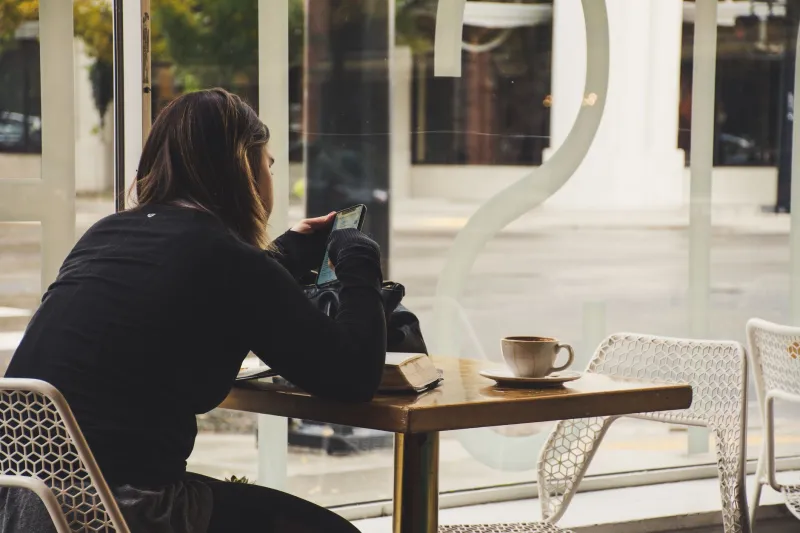
There's a corner table at a coffee shop in Austin, Texas that has witnessed more career pivots, client wins, creative breakthroughs, and quiet professional crises than any corner office ever could. It belongs — unofficially, emotionally, completely — to a freelance copywriter named Dani Reyes, who has been showing up there almost every weekday morning for four years.
 Photo: Austin, Texas, via www.la-haute-saone.com
She doesn't own it. She can't reserve it. But the baristas know to keep an eye out for her around 8:15, and on the rare mornings someone else is sitting there, the whole day feels slightly off.
"I know it sounds dramatic," Dani admits, laughing into her oat milk latte. "But that table is where I pitched my biggest client ever. It's where I rewrote my entire portfolio. I genuinely think I owe a portion of my income to that specific chair."
She's not alone. Across the country, a quiet revolution in how Americans work has turned coffee shops into something they were never quite designed to be: the professional home base for an entire class of freelancers, remote employees, and small business owners who've discovered that the ambient hum of an espresso machine might be the most underrated productivity tool in existence.
The Unspoken Contract Between Cafés and Their Working Regulars
Walk into any independently owned coffee shop on a Tuesday morning and you'll see them — laptops open, headphones in, notebooks spread across tables like they're mapping a small country. The working regulars. They're not just customers. They're something closer to tenants.
Café owners have complicated feelings about this arrangement. Marcus Webb, who runs a specialty roaster and café in Denver's RiNo neighborhood, says the relationship requires real honesty from both sides.
"We genuinely love our regulars who work here. They create atmosphere. New customers walk in and see people focused and productive and they think, 'this must be a good place.' There's a social proof thing happening," he explains. "But the unspoken deal is that they're not camping on a drip coffee for six hours during a Saturday rush. Most of our regulars get that without being told."
That unspoken contract — buy enough, be considerate of space, tip well, maybe clear out when it gets slammed — is the invisible agreement that keeps the whole ecosystem functioning. It's a relationship built on mutual respect and, honestly, a shared understanding that everyone in the building is trying to build something.
For the cafés that get it right, these working regulars become something invaluable: community anchors. They're the ones who bring friends in for meetings, who post about the shop on LinkedIn, who leave reviews that sound less like Yelp ratings and more like personal testimonials.
Why the Ambient Hum Actually Works
Here's the thing that people who've never worked from a coffee shop don't quite believe until they try it: the noise helps.
Research has backed this up for years. A moderate level of ambient noise — around 70 decibels, which is roughly what you'd find in a busy café — has been shown to enhance creative cognition compared to complete silence or loud environments. The gentle chaos of background conversation, the rhythmic percussion of a grinder, the occasional steam wand screech — it all creates what psychologists sometimes call "diffuse attention," a state where your brain stays loosely alert without locking into hyper-focus.
For creative workers especially, that mental texture can be exactly what unlocks the good stuff.
"I cannot write at home," says Jordan Malik, a UX designer who works remotely for a tech startup in San Francisco but lives — and works — out of a café in the Mission District most mornings. "At home, my brain knows it's home. It wants to rest. Here, there's just enough stimulation that I stay in work mode without burning out. It's like the coffee shop is doing half the psychological lifting for me."
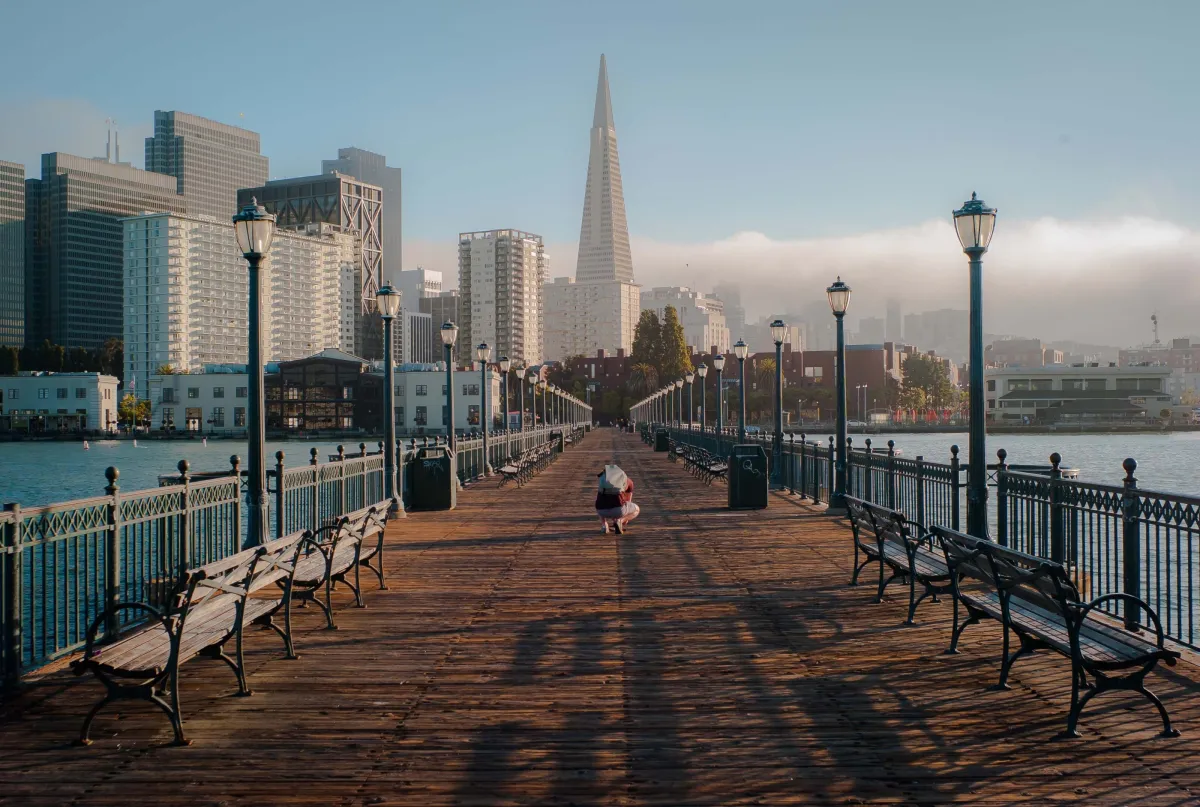 Photo: San Francisco, via www.novo-monde.com
The caffeine, of course, does the other half.
When the Sanctuary Disappears
Ask any long-term coffee shop worker what their biggest professional fear is, and it rarely involves losing a client or missing a deadline. It's the sign on the door.
"CLOSED. Thank you for 12 wonderful years."
When Priya Chandrasekaran's go-to café in Chicago's Logan Square neighborhood shut down unexpectedly in early 2023, she describes the weeks that followed as a genuine professional identity crisis.
"I know how that sounds. A coffee shop closed and I had a crisis," she says. "But that place was my structure. I knew when I walked through that door, work mode turned on. Without it, I was just... adrift. I worked from home for two months and my output tanked. I couldn't figure out why I suddenly couldn't focus."
What Priya was experiencing wasn't weakness or dependency in any embarrassing sense. It was the disruption of what behavioral psychologists call a "contextual cue" — an environmental trigger that reliably activates a specific mental state. Her brain had been trained, over years, to associate that café with productive work. Strip away the cue, and the mental state became harder to access.
She eventually found a new spot — a newer café about six blocks away — but says it took almost three months before it felt like hers.
"You have to earn a place," she says. "The baristas have to know your order. You have to find your table. You have to get through enough bad days there that it starts to feel real."
Building Your Career on Someone Else's Square Footage
There's something philosophically interesting about the whole arrangement. These workers are, in a very real sense, building professional lives on borrowed ground. The café can raise its prices, change its hours, sell to a developer, or simply decide that the laptop crowd isn't worth the trouble anymore. And yet, thousands of Americans have decided that's a trade-off worth making.
Maybe because the alternative — the isolation of a home office or the sterility of a co-working space — costs something too. Community. Serendipity. The barista who notices you look stressed and makes your drink a little stronger without being asked.
Dani, back at her corner table in Austin, puts it simply: "I've had colleagues ask me why I don't just get a real office. And I think about that sometimes. But then I look around here — at the other regulars, at the new faces, at Marcus behind the counter — and I think, this is a real office. It's just one where the rent comes in the form of lattes and the company culture is actually good."
She takes a sip. Her laptop screen glows. Somewhere behind the counter, an espresso machine exhales.
Another workday begins, right on schedule.
If your best work happens with a cup in hand and a café buzzing around you, you're not distracted — you might just be exactly where you're supposed to be.