They Already Know Your Order: The Small-Town Coffee Shops Where You Can't Stay a Stranger
They Already Know Your Order: The Small-Town Coffee Shops Where You Can't Stay a Stranger
You walk in on a Tuesday. Nothing special about it. You haven't said a word, haven't pulled out your phone to open an app, haven't sidled up to a counter to spell your name for the third time that week. And yet, before you've fully unwrapped your scarf, someone behind the counter is already reaching for your mug.
Not a paper cup. Your mug. The ceramic one with the chip on the handle that nobody ever bothered to replace because, honestly, it just feels right.
This is what it means to be known by a place.
In the age of contactless payments, algorithmic café recommendations, and loyalty apps that track your spending without ever learning your face, the small-town American coffee shop has become something quietly radical. Something almost rebellious. It is, in the truest sense, the last place in the country where you genuinely cannot stay a stranger.
The Counter as Community
Drive through the rural Midwest — through towns like Lanesboro, Minnesota, or Milford, Iowa — and you'll find them. They might not call themselves coffee shops at all. Sometimes they're diners with a coffee station that's been running since 1974. Sometimes they're a single-room operation tucked between a hardware store and a post office, the kind of place with a hand-lettered sign and a screen door that slaps shut behind you.
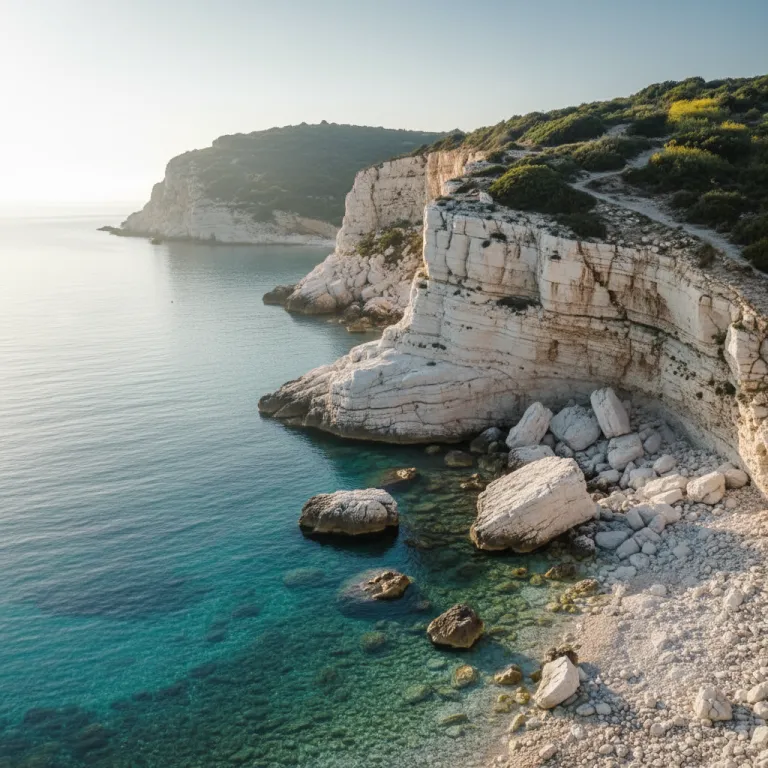 Photo: Milford, Iowa, via media.notranjskoprimorske.si
 Photo: Lanesboro, Minnesota, via www.webstore-securite.fr
But walk in twice, and something shifts. Walk in five times, and you're practically furniture.
The counter culture in these spaces runs on a different clock than the rest of American commerce. It's slower, more attentive, and stubbornly human. The regulars don't just share space — they share information. Who got a new job, whose kid made the varsity team, whose dad passed last spring. The coffee is the medium, but the community is the message.
In Appalachian towns across eastern Tennessee and western North Carolina, the same dynamic plays out in wood-paneled spots where the Wi-Fi password is scrawled on a chalkboard and the specials change based on what came in fresh that morning. These aren't destinations in the travel-influencer sense. They're gravitational centers for the people who live there — places that hold the town's story the way a journal holds a life.
What It Means to Be Witnessed
There's a particular kind of comfort in being witnessed by a place. Not surveilled. Not tracked. Witnessed.
When the woman behind the counter in a small Gulf Coast town in Mississippi remembers that you take your coffee with two sugars and that you always look a little rough on Mondays — that's not data collection. That's care. When the regulars at a corner café in rural New Mexico shift down one stool without being asked because they know you like the seat closest to the window, that's not a coincidence. That's belonging.
Grief shows up in these places. So do milestones. People have announced pregnancies over coffee at the same counter where they later sat in silence after a loss. High school seniors have come in on the morning of graduation looking terrified, and the person who made their drink told them they'd be fine — and meant it. The coffee shop becomes a kind of living archive of the community's emotional life.
That's something no app can replicate. No amount of "your usual?" prompts on a touchscreen gets close.
The Archetypes That Hold Us
Across different regions, these spaces take on distinct personalities, but the underlying function is the same.
In the rural Pacific Northwest — think small logging towns in Oregon or farming communities in eastern Washington — the local coffee shop often doubles as an informal town hall. Farmers, teachers, and retirees occupy the same row of stools every morning, debating local politics and weather with equal intensity. The coffee is strong, the opinions stronger, and nobody leaves without knowing the day's news.
In the Deep South, the equivalent is often the diner booth. Places in small Georgia towns or along the back roads of Alabama where the coffee comes in a pot that never seems to empty and the conversation picks up exactly where it left off, even if it's been three weeks since you last came in. Time works differently here. So does memory.
Out in the Great Plains — Kansas, Nebraska, the Dakotas — these spaces often carry a particular weight. In towns that have been slowly shrinking for decades, the local coffee shop is sometimes one of the last gathering places left. The grocery store closed. The movie theater closed. The coffee shop stayed. It stays because people need it to stay, and because the person running it understands that they're not just selling coffee. They're holding something together.
The Radical Act of Remembering
Here's the thing that gets easy to miss: in 2025, being remembered by a person — not a profile, not a preference algorithm, not a loyalty program — is genuinely unusual. We have built entire systems designed to simulate familiarity while keeping actual human attention at arm's length. Contactless everything. Self-checkout. Order-ahead apps that let you slide in and out without making eye contact.
And then there's the small-town coffee shop, where someone who has probably been on their feet since 5 AM looks up when you walk in and says your name. Not because they're required to. Because they actually know it.
That's the radical part. Not the locally sourced beans or the hand-painted menu board. The radicalism is in the sustained, unmonetized act of paying attention to another person across a counter, day after day, year after year.
Your coffee destiny, wherever it leads you, has probably taken you past one of these places at some point. Maybe you stopped because you needed caffeine and there was nowhere else. Maybe you came back because something about it settled in you.
You Were Never Really Just Passing Through
The regulars in these small-town shops will tell you the same thing, in different words depending on where you find them. They didn't plan to become regulars. They just came back. And then came back again. And at some point, the place started to feel like it had always been part of their story — like the coffee was less something they were choosing every morning and more something they were returning to.
That's the thing about these spaces. They don't wait for you to decide to belong. They just quietly make room.
So if you're ever passing through a small town on a slow highway and you see a hand-lettered sign in a window — go in. Order the coffee. Come back tomorrow if you can.
You might be surprised how quickly they learn your name.