Hired, Fired, and Completely Rebuilt: How Six Months Behind an Espresso Bar Remade Me
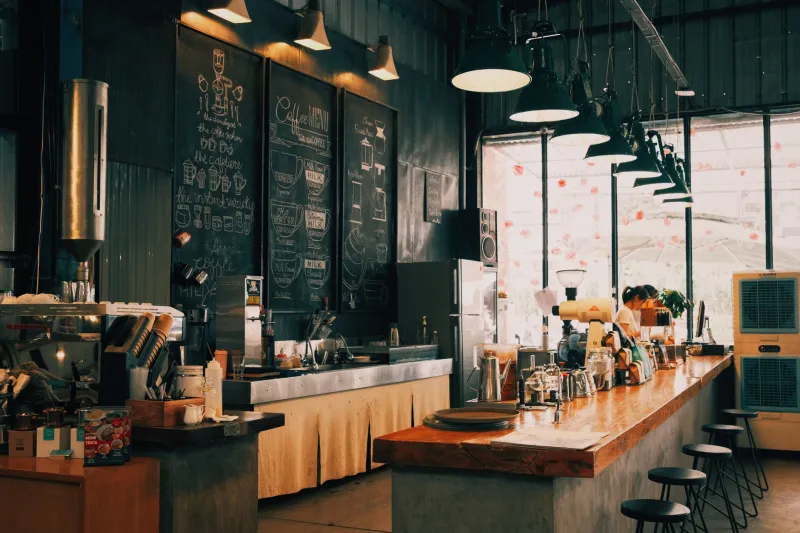
I didn't go looking for a coffee shop job to find myself. I went because I needed rent money and a place called Grounds & Glory had a hand-lettered sign in their window that said Help Wanted — Will Train. Those two words — will train — were doing a lot of heavy lifting for me at the time. I had just left a graduate program I wasn't sure I believed in, my savings account was a genuine tragedy, and my sense of identity was somewhere between "figuring it out" and "actively falling apart."
Six months later, they let me go. Budget cuts, they said. Seasonal slowdown. I nodded, untied my apron, and walked out into a Tuesday afternoon that felt strangely like the first day of something.
I was right. It was.
The First Week Almost Broke Me
Here's what nobody tells you about learning to pull espresso shots: your hands know nothing. Your instincts, built over years of being reasonably competent at other things, are completely useless here. The grind is too coarse, then too fine. The tamp pressure is wrong. The shot runs too fast, then too slow, then just right — and you have no idea what you did differently.
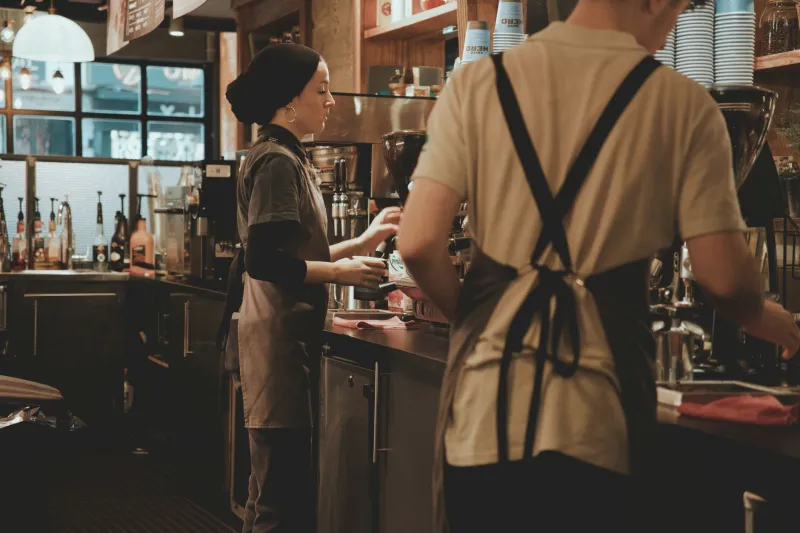
My trainer, a woman named Desiree who had been working the morning shift for three years and had the calm authority of someone who had seen every possible human disaster before 9 a.m., watched me destroy about forty shots in a row without changing her expression. "You're thinking too hard," she said finally. "Stop trying to control it. Just feel when it's right."
I wanted to argue that "feeling when it's right" wasn't exactly a transferable skill set. Instead, I pulled another shot. And then another. Somewhere around shot fifty-three, I felt it. The resistance in the portafilter. The color of the crema. The timing that suddenly made sense in my hands before my brain had processed it.
That moment — tiny, unglamorous, smelling faintly of burnt milk — was the first time in months I had learned something completely new. It felt like oxygen.
What the Morning Rush Actually Teaches You
The 7 to 9 a.m. window at a busy coffee shop is its own kind of philosophy course. You learn things about human nature that no classroom can offer.
You learn that people are at their most honest before their first cup. Stripped of the social polish that caffeine eventually provides, they shuffle in with their real faces on — anxious, tender, impatient, lonely. The guy who snapped at me on a Wednesday turned out to be dealing with a sick parent. The woman who always over-explained her complicated order eventually told me she just liked having someone listen. The regulars who never said much beyond their drink order sometimes left the biggest tips, as if the transaction itself was the whole point — a small, reliable kindness in an unreliable world.
You also learn what you're made of under pressure. When the espresso machine goes down at 8:15 on a Monday and there are fourteen people in line and your shift partner just called in sick, you discover very quickly whether you fold or adapt. I folded the first time. Completely. Desiree handled it while I stood there uselessly. The second time, I adapted. Not gracefully — but I adapted. That distinction mattered more to me than I expected.
The Regulars Who Quietly Changed Me
Working the same shift for months means you start to know people in a particular, sideways kind of way. You don't know their last names or where they grew up or what keeps them awake at 3 a.m. But you know their order, their mood patterns, the days they're running late, the days they linger.
There was a retired teacher named Harold who came in every morning at 6:45 for a plain drip coffee with room for cream. He always brought a paperback. He never seemed to be in a hurry. One morning, slow enough for conversation, he told me he'd spent thirty years rushing through mornings and had decided, upon retirement, to practice being unhurried instead. "I practice it like an instrument," he said. "Every day."
I thought about Harold a lot after I left that job. I still think about him now.
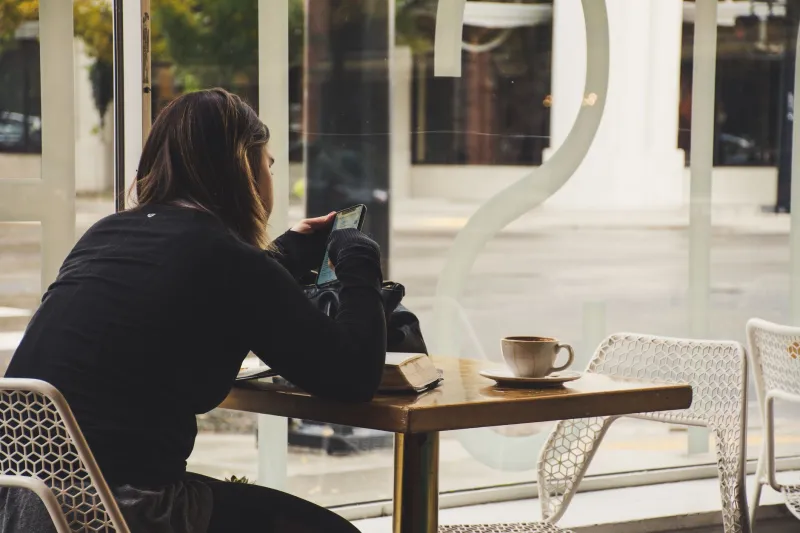
There was also a college student named Priya who ordered an oat milk latte every Thursday and always looked like she was carrying the weight of seventeen deadlines. One afternoon she told me she'd just declared her major in something her parents didn't understand. "Does it scare you?" I asked, because it seemed like the right question. "Completely," she said, and smiled like that was somehow the point.
These weren't deep friendships. They were something else — brief, recurring human contact built on the ritual of a shared cup. And yet they shaped me in ways that deeper relationships sometimes don't. Maybe because there was no agenda. No performance. Just a person, a drink, and whatever they were carrying that morning.
Why Getting Let Go Was the Right Ending
When Grounds & Glory told me they were cutting hours and I was the most recent hire, I wasn't devastated the way I might have expected. Something had already shifted. The job had done what it needed to do.
I had walked in uncertain of nearly everything — my direction, my resilience, my ability to show up reliably for something outside of my own head. I walked out knowing I could learn a physical skill from scratch. I knew I could hold composure under pressure, at least most of the time. I knew I could pay attention to other people in a sustained, meaningful way. And I knew — in that bone-deep, hard-to-articulate way — that serving someone well is not a small thing. It's not beneath anything. It might, in fact, be the whole thing.
The espresso bar didn't give me a career. It gave me something rarer: a recalibration. A six-month detour that turned out to be the most direct route I could have taken.
What the Cup Was Always Trying to Tell Me
Coffee has a way of showing up at the exact moments in life when everything is in flux. The cup before the hard conversation. The one you make on autopilot when you don't know what else to do. The first one brewed in a new apartment that doesn't feel like home yet.
For me, the coffee shop itself became that cup. A container for a transitional chapter. A place where the noise of my uncertainty got drowned out — temporarily, mercifully — by the noise of steaming milk and grinding beans and a hundred people starting their days.
I still stop by Grounds & Glory sometimes when I'm back in that neighborhood. Desiree is still there, still calm, still watching new hires fumble their first shots with that same unchanged expression. I always order a drip coffee with room for cream.
Harold would approve.