The Sacred Brew: How Specialty Coffee Quietly Became America's New Morning Religion
The Sacred Brew: How Specialty Coffee Quietly Became America's New Morning Religion
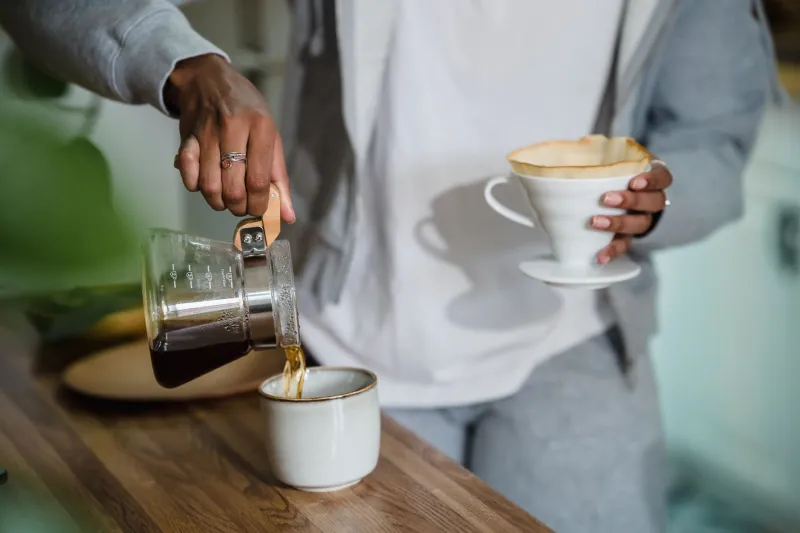
Somewhere in Portland, a barista named Marcus is weighing his coffee grounds to the tenth of a gram. In Nashville, a woman named Delia has been standing at her kitchen counter for the past four minutes, pouring water in slow, deliberate circles over a bed of freshly ground Ethiopian Yirgacheffe. In a small roastery in Asheville, North Carolina, the owner — a former high school teacher named Greg — is cupping this morning's batch with the focused quiet of someone performing a ceremony.
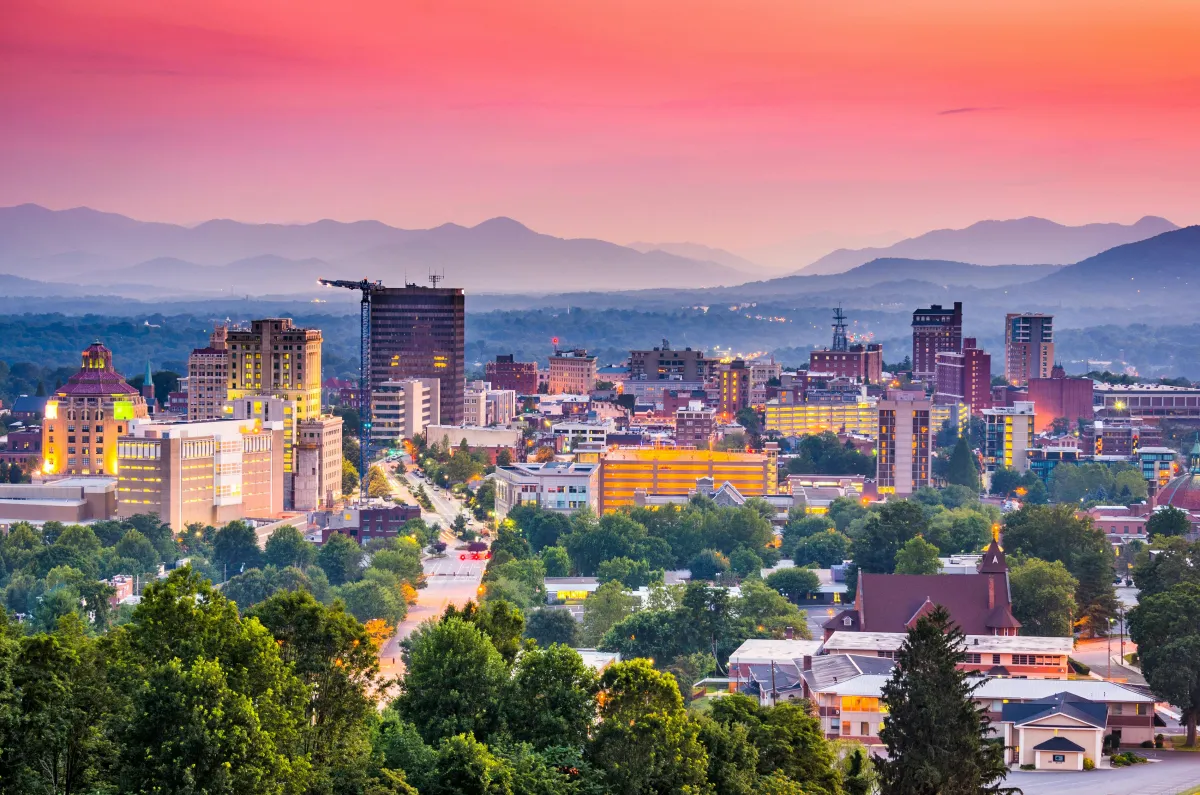 Photo: Asheville, North Carolina, via images.musement.com
None of them would necessarily use the word "spiritual" to describe what they're doing. But ask them to skip it, and you'd understand why the word fits.
America's relationship with coffee has always been complicated — utilitarian, social, deeply habitual. But somewhere in the past two decades, a significant slice of the country started treating their morning cup as something more than fuel. The third-wave coffee movement didn't just elevate quality standards. It handed people a ritual at a time when traditional rituals were quietly falling away.
What "Third Wave" Actually Means — And Why It Matters
The term gets thrown around a lot, but it's worth grounding it. First-wave coffee was about accessibility — getting caffeine into as many American homes as possible, Maxwell House and Folgers leading the charge. Second-wave was about experience — Starbucks and its contemporaries turned coffee into a social destination and introduced millions of people to espresso drinks. Third-wave, which began picking up serious steam in the early 2000s, shifted the focus again: toward the coffee itself.
Single-origin sourcing. Direct trade relationships with farmers. Precise roasting profiles. Manual brewing methods — pour-over, AeroPress, Chemex, siphon — that require attention, patience, and a willingness to slow down. Third-wave coffee asked consumers to care about where their beans came from, who grew them, and how the brewing process affected the final flavor. It was, in a sense, an invitation to be present.
That invitation landed at a culturally significant moment. Mindfulness was going mainstream. Meditation apps were racking up millions of downloads. People were actively searching for ways to inject intention into a daily life that felt increasingly automated and distracted. And here was this ancient beverage, newly reframed as a craft practice that rewarded exactly the kind of slow, deliberate attention that mindfulness teachers were prescribing.
The overlap wasn't accidental. It was, maybe, a little bit fated.
The Ritual Is the Point
Ask specialty coffee drinkers to describe their morning routine and the language they reach for is telling. "Grounding" comes up constantly. So does "meditative," "centering," and — perhaps most revealingly — "mine."
Delia, the Nashville pour-over devotee mentioned above, put it plainly in a conversation we had for this piece: "It's the one part of my morning that nobody else has a claim on. The kids aren't awake yet, my phone is face-down, and I'm just... there. With the water and the coffee. It sounds small, but it sets the tone for everything."
That sense of ownership over a quiet, intentional act is a thread that runs through specialty coffee culture broadly. The ritual creates a container — a few minutes each morning that belong entirely to the person performing them. In a culture that increasingly commodifies attention, that's not nothing. That's actually quite a lot.
Marcus, who has been pulling shots at a third-wave café in Portland for six years, sees it from the other side of the counter. "People come in here and they exhale," he says. "Like, visibly. The second they walk in and smell the coffee and hear the grinder, something releases. I'm not a therapist. But I think what we're doing here is more than making drinks."
From Farm to Philosophy: The Ethics of the Cup
One of the defining features of third-wave coffee culture is its emphasis on transparency — knowing not just what's in your cup, but who grew it and under what conditions. Direct trade relationships, where roasters work directly with farming families rather than through commodity brokers, have become a point of genuine pride for specialty roasters across the country.
This ethical dimension adds another layer to the quasi-spiritual framing. When you know that your morning cup came from a specific cooperative in Colombia's Huila region, that the farmers there received above-market prices, that the roaster visited the farm and shook hands with the people who picked the cherries — your coffee becomes a connection. A small, tangible thread linking your kitchen in Denver or Chicago or Austin to a hillside farm thousands of miles away.
Greg, the Asheville roaster, describes this as the part of his work that feels most meaningful. "There's something about knowing the whole chain," he says. "I know those farmers. I've been to their farms. When I roast their coffee and someone drinks it here and it genuinely moves them — that's a complete circle. That feels like something."
For consumers who have become increasingly skeptical of large institutions and disconnected supply chains, this kind of radical transparency carries real emotional weight. It transforms a transactional purchase into something that feels, however modestly, like participation in a larger story.
The Café as Community Anchor
It would be incomplete to talk about specialty coffee as a personal practice without acknowledging the communal dimension. The third-wave café, at its best, functions as what sociologists call a "third place" — somewhere that's neither home nor work, a neutral ground where community forms organically.
Think about the independent coffee shops in your own neighborhood. Chances are you know the names of at least a few of the regulars, even if you've never formally met. There's a shared language — a shorthand built around orders, preferences, the particular rhythm of a familiar space. It's low-stakes community, maybe, but it's real. And in an era of increasing social isolation, real community, however quietly it forms, matters.
The café as sacred space isn't a new idea — coffeehouses have historically been sites of intellectual exchange and social ferment, from the Ottoman Empire to Enlightenment-era London to the Beat Generation's San Francisco. What's interesting about the contemporary American third-wave café is the way it layers that social function with something more inward. You can come to connect, or you can come to be alone in a way that feels supported rather than lonely. Both are welcome. Both are, in their way, nourishing.
Is It Really Spiritual, Though?
Fair question. Calling coffee "spiritual" risks tipping into pretension — the kind of overwrought reverence that gives specialty coffee its occasional reputation for self-seriousness. And plenty of people who take their brewing seriously would roll their eyes at the framing.
But spirituality, at its most basic, is about meaning-making. It's about the practices and rituals through which we locate ourselves in the world, connect to something larger than our immediate concerns, and find a moment of genuine presence in the relentless forward motion of daily life. By that definition, what a lot of Americans are doing with their morning coffee qualifies — not because it's mystical, but because it's intentional.
At Caffeine Destiny, we've always believed that every cup is a step on your journey. That's not marketing fluff — it's an observation about how coffee actually functions in people's lives. It marks time. It creates rhythm. It's often the first conscious choice you make each morning: this bean, this method, this moment of quiet before the day begins.
That's not nothing. That's a practice. And a practice, repeated with intention over years and decades, has a way of becoming something you might just call sacred.
The Journey Continues
The third wave hasn't crested — if anything, it's deepening. Micro-roasters are proliferating in cities and small towns alike. Home brewing equipment that would have seemed absurdly specialized a decade ago is now standard in millions of American kitchens. The conversation around coffee has expanded to include not just flavor and origin, but sustainability, equity, mental health, and yes, meaning.
Where it goes from here is anybody's guess. But the direction feels clear: Americans aren't going back to treating coffee as pure utility. The cup has become something more. A ritual. A practice. A small, daily act of intention in a world that doesn't always make room for those.
For the people who've found that — who wake up each morning and feel, reaching for the kettle or the grinder, that they're doing something that genuinely matters to them — the word "spiritual" probably still feels like too much.
But "meaningful"? Yeah. That one fits just fine.