Steam, Sweat, and Self-Discovery: What the Barista Life Really Teaches You
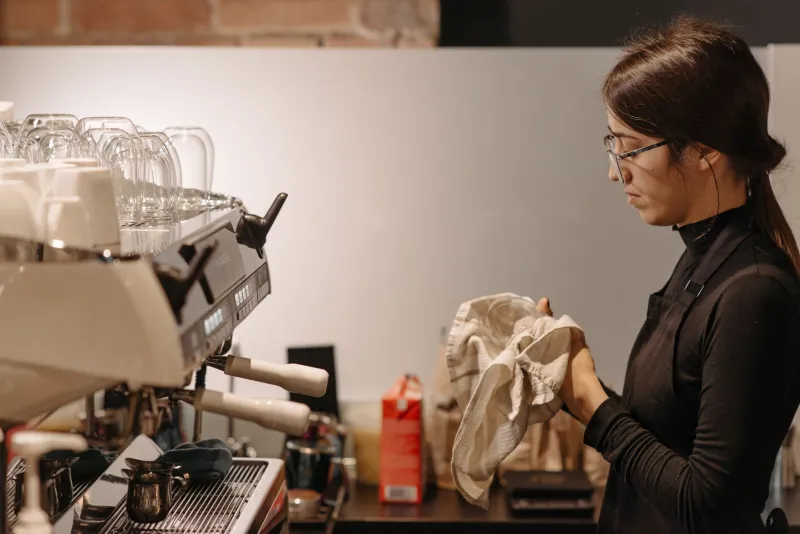
Somewhere between the 7 AM rush and the last latte of a closing shift, something happens to a person. It's hard to name in the moment — you're too busy tamping grounds and calling out drink orders to notice — but years later, former baristas will tell you the same thing with an almost eerie consistency: that job changed me.
For a huge swath of Americans, working in a coffee shop is a rite of passage as formative as college or a first heartbreak. The café doesn't care about your five-year plan. It just hands you an apron, points you at the espresso machine, and lets the education begin.
The Unlikely Classroom Behind the Counter
Ask Marcus Delray, now a licensed therapist in Atlanta, what his master's program taught him, and he'll give you the expected answer. Ask him what actually prepared him to sit across from someone in crisis, and he'll laugh and say, "Honestly? The coffee shop."
Marcus spent three years pulling shots at an independent café in Decatur, Georgia, in his early twenties. He wasn't planning a career in mental health yet — he was just trying to pay rent. But something about the daily rhythm of the job started rewiring him.
"You learn to read people almost instantly," he says. "Is this person having the worst morning of their life? Are they lonely and just want someone to talk to for sixty seconds? Do they need me to be invisible and efficient, or do they need a human moment? You develop this radar, and you develop it fast, because the line is eight people deep and you don't have time to get it wrong."
That radar, he'll tell you, is basically the foundation of therapeutic presence. The coffee shop just taught it to him in real time, under pressure, with a milk steamer screaming in his ear.
Patience Isn't Passive — It's a Skill You Grind For
Chef Renata Souza runs a celebrated farm-to-table restaurant in Portland, Oregon. Before culinary school, before the James Beard nomination, she was a barista at a small café in Providence, Rhode Island, where she learned something that no kitchen has ever fully retaught her: patience is not the absence of urgency. It's the management of it.
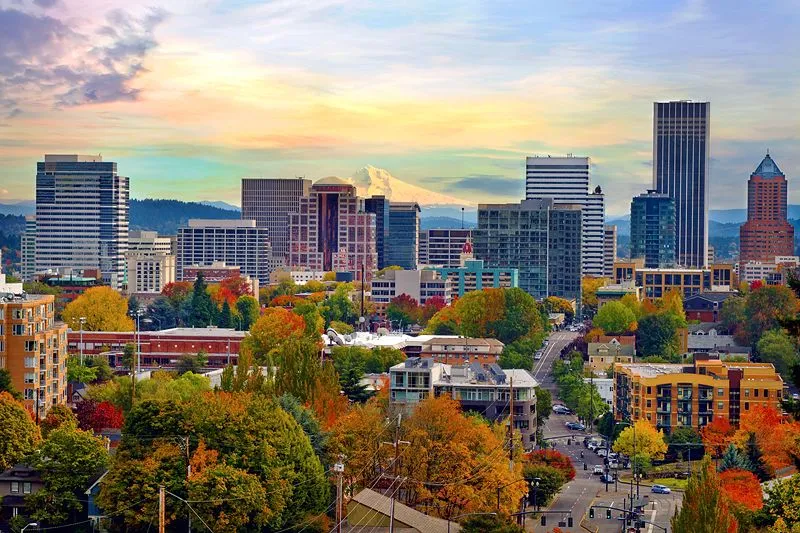 Photo: Portland, Oregon, via i.pinimg.com
"In a café, everything is urgent," she explains. "The milk has to be a certain temperature. The shot has a window of maybe thirty seconds before it goes bitter. The customer needed their drink five minutes ago. And somehow, inside all of that urgency, you have to stay completely calm and precise."
She draws a direct line from that experience to her cooking philosophy — the idea that great food, like great coffee, cannot be rushed into existence. It has to be coaxed. "The café taught me that craft lives in the tension between speed and care," she says. "You carry that with you forever."
The Community You Didn't Know You Were Building
One of the quieter revelations of café work is how deeply it roots you in a place. Not just a physical location, but a web of human relationships that accumulates over months and years of daily interaction.
Jordan Weiss, who now leads operations for a mid-sized tech company in Austin, spent four years behind the bar at a neighborhood café in Chicago's Wicker Park neighborhood during his mid-twenties. He describes the experience as "accidentally becoming the connective tissue of a community."
"You know the regulars. You know who just got divorced, who's interviewing for a new job, whose kid is sick. You remember that one woman takes oat milk now because she told you about her dairy allergy three months ago. And over time, you realize you're not just making drinks — you're holding a little piece of everyone's daily life."
Jordan credits that experience with reshaping how he thinks about leadership. "In tech, people talk about culture constantly. But most of them have never actually built a culture from scratch, one human interaction at a time. I did that every single day for four years. I just happened to be doing it with an espresso machine."
Getting Fired and What It Actually Costs You
Not every café story is a clean arc of growth and gratitude. Sometimes the coffee shop fires you, and that, too, turns out to be part of the curriculum.
Amanda Torres was let go from a café in Denver after eight months — a combination of a scheduling conflict and, she admits freely, a period of personal chaos that made her unreliable. She was twenty-three, embarrassed, and convinced it meant something terrible about who she was.
"I cried in my car for like an hour," she recalls. "And then I went back inside to return my apron, and my manager — this woman named Claudia — sat down with me and said, 'You're going through something. Figure out what it is. Then come back and apply again if you want.'"
Amanda didn't go back. She went to therapy, figured out she was dealing with undiagnosed anxiety, and eventually found her way into social work. She still thinks about Claudia. "That moment of being fired with dignity — of someone seeing me clearly even when I couldn't see myself — that was a turning point. The café gave me that, even on the way out the door."
Why the Espresso Bar Is an Unlikely Finishing School
There's a reason so many people who've worked in coffee shops describe the experience with a reverence that seems almost disproportionate to the job title. The café, at its best, is a place where abstract virtues — empathy, precision, resilience, presence — become concrete daily practices.
You can't fake a good latte. You can't phone in a morning rush. And you absolutely cannot hide who you are when you're running on four hours of sleep, your feet hurt, and the espresso machine is making a noise it definitely wasn't making yesterday.
The coffee shop strips you down and builds you back up, one shift at a time. It teaches you that connection is a skill, that craft requires humility, and that every single person who walks through that door is carrying something you can't see.
That's not a bad education for any life, in any field.
The Cup That Started Everything
At Caffeine Destiny, we talk a lot about the idea that every cup is a step on your journey. For a lot of us, the most formative cups weren't the ones we drank — they were the ones we made for someone else.
If you've ever worn that apron, you know exactly what we mean. And if you haven't, maybe the next time you hand over your order, you'll look at the person on the other side of the counter a little differently.
They're not just making your coffee. They're becoming who they're going to be.