The Patient Cup: Why Building a Slower Coffee Practice Might Be the Best Investment You Make This Year
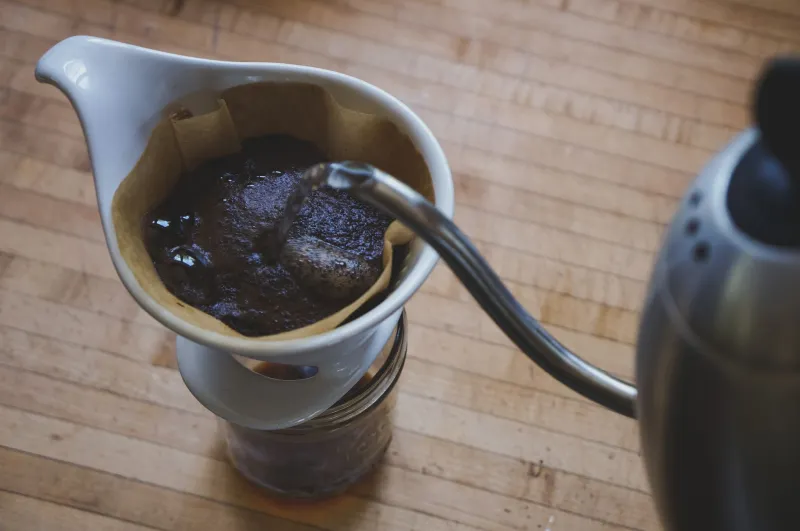
America has a complicated relationship with patience. We want the overnight success, the instant download, the express lane. And nowhere is that more visible than in how most of us make our morning coffee — a pod in a machine, sixty seconds, done. Which is fine. But there's something worth considering in the fact that the people who talk most passionately about their coffee are almost never the ones using the fastest method.
That's not snobbery. It's a clue.
What Specialty Coffee Actually Teaches You
If you've ever gone down the specialty coffee rabbit hole — sourcing single-origin beans, dialing in a grind, learning about the bloom, obsessing over water temperature — you know it's not really about the coffee. Or rather, it's about the coffee and something else. Something harder to name.
The process of making genuinely great coffee at home is, step by step, a masterclass in delayed gratification. You buy quality beans and then you wait for them to degas properly before brewing — ideally three to seven days off-roast. You grind fresh, because pre-ground coffee loses its best volatile compounds within minutes. You heat your water to somewhere between 195°F and 205°F, because boiling water scorches the grounds and flat water under-extracts them. You pour slowly, in controlled circles, and then you wait for the bloom — that thirty-second pause where the coffee off-gasses and prepares to give you everything it has.
None of this is fast. All of it rewards attention.
And here's the thing: those are exactly the conditions under which good decisions get made. Slow, attentive, process-oriented thinking is the engine behind every meaningful long-term outcome, whether you're talking about a 401(k), a creative project, a relationship, or a career pivot.
The Compounding Logic of a Better Morning
Financial advisors love to talk about compound interest because the math is almost embarrassingly compelling. Small, consistent contributions — made patiently, over time — produce outsized results. The key word is consistent. You don't get the returns if you're only doing it when you feel like it.
A morning coffee practice works the same way. Not the caffeine hit — that's immediate and fleeting. The practice itself. The ritual of showing up, before the notifications start and the demands stack up, and doing something slow and deliberate and entirely for yourself.
Research on morning routines consistently shows that people who begin their day with a structured, low-stimulation activity — something that requires attention but not urgency — report higher focus and lower stress throughout the day. A manual brew method is, almost by accident, one of the best morning anchors available. It takes five to ten minutes. It requires just enough engagement to pull you into the present without overwhelming you. And it produces something genuinely good at the end.
That's compounding. Small daily investment, meaningful long-term return.
Building Your Practice: Where to Actually Start
You don't need to spend a fortune to make this work. Here's a practical path in.
Start with the grind. If you're buying pre-ground coffee, switching to whole beans and a burr grinder is the single highest-impact change you can make. A decent hand grinder runs around $30 to $50 and will dramatically improve your cup. It also adds about two minutes to your morning — two minutes of tactile, focused activity that functions almost like a micro-meditation.
Slow down the pour. If you already use a drip machine, consider trying a pour-over cone — a Hario V60 or a Chemex. Both are under $50 and require nothing more than hot water, a filter, and a little attention. The ritual of the pour is where the mindfulness lives.
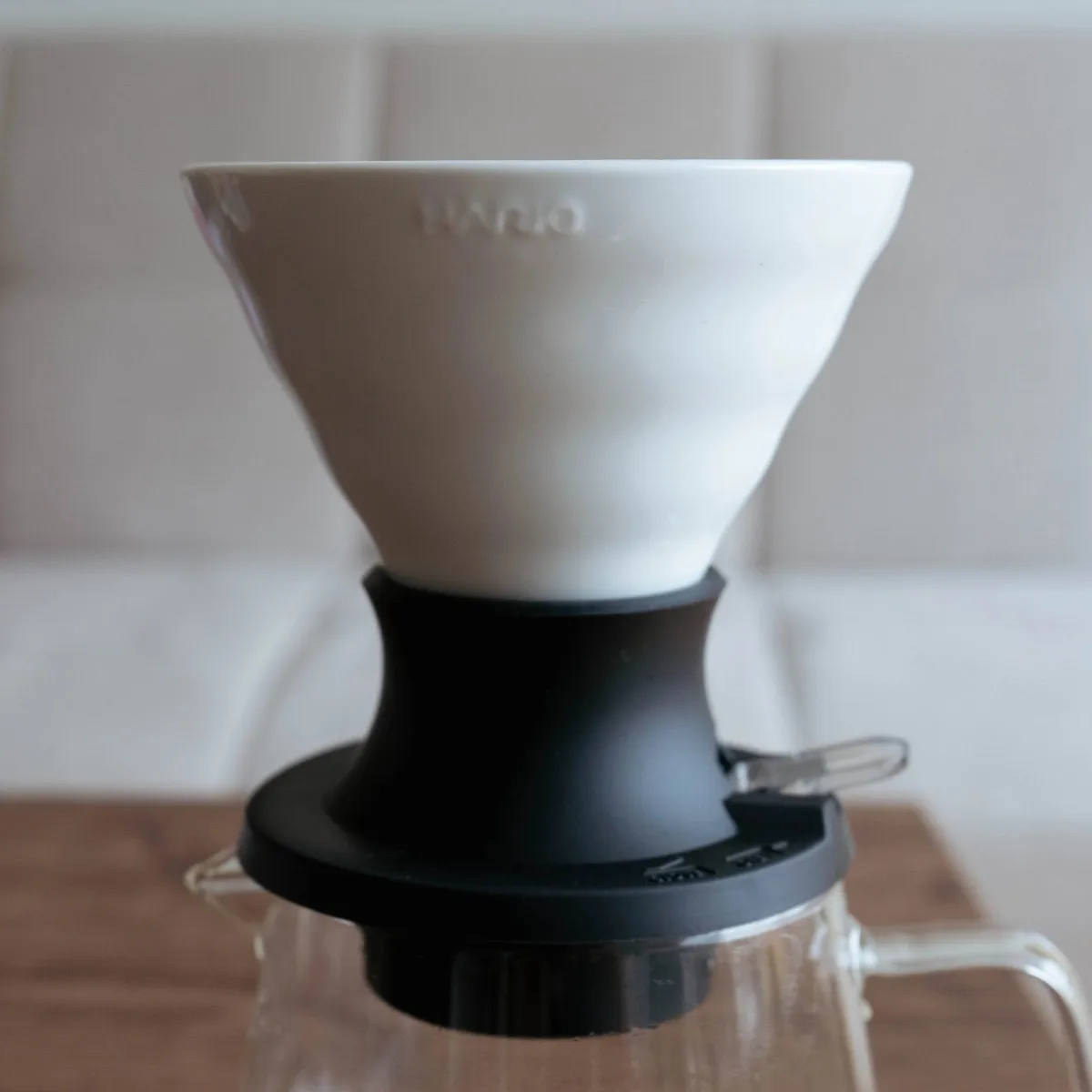 Photo: Hario V60, via thebasicbarista.com
Pay attention to your beans. Seek out a local roaster, or explore one of the many excellent subscription services operating across the US. Ask where the beans are from. Read the tasting notes — not to be pretentious, but to practice noticing. That skill of noticing, of paying close attention to what's in front of you, transfers.
Protect the time. This is the hardest part. Put your phone in another room for the ten minutes it takes to brew. Don't check email. Don't scroll. Just make the coffee. This isn't about productivity hacking — it's about teaching yourself that some things are worth doing without a parallel agenda.
Patience as a Competitive Advantage
In a culture that glorifies hustle and speed, patience has quietly become one of the most underrated skills an ambitious person can develop. The ability to trust a slow process — to invest effort now for returns that won't materialize until later — is what separates people who build things that last from people who are always chasing the next quick win.
Specialty coffee won't teach you patience on its own. But it creates the conditions for it. Every morning, it asks you to slow down, to follow a process, to trust that the extra steps are worth it. And every morning that you do, you're practicing something that extends well beyond the cup.
At Caffeine Destiny, we think your coffee routine is one of the most underutilized tools you have. Not because caffeine is magic — though it helps — but because the ritual around it can be. Grind now. Bloom now. Wait. The best things usually ask you to.