Full Circle at the Corner Table: When Your Old Employer Becomes Your Favorite Office
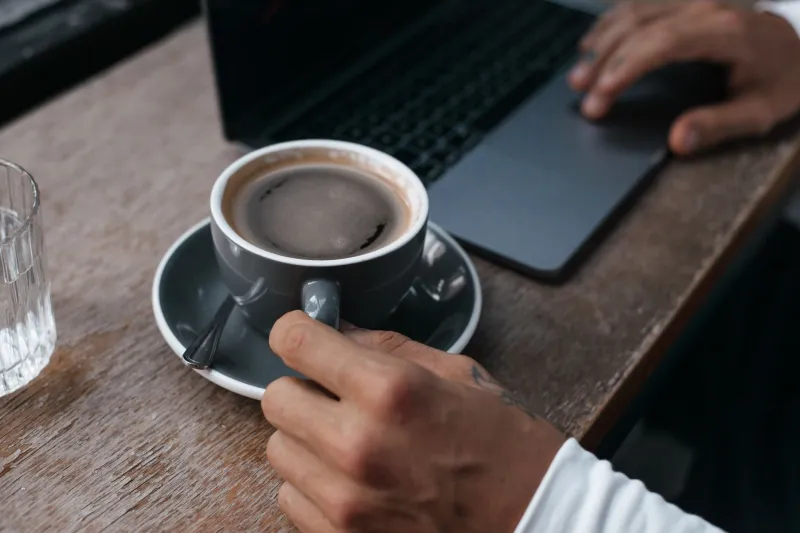
There's a particular kind of strange that settles over you the first time you walk back into a coffee shop where you used to work — not as an employee, not as someone stopping in quickly before a commute, but as a person who has decided, deliberately, to spend four hours here with a laptop and a complicated oat milk order.
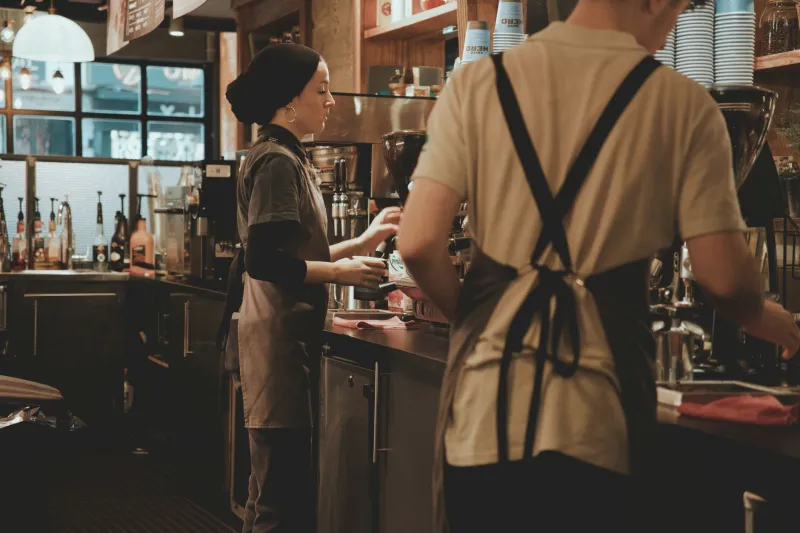
The muscle memory is the first thing that gets you. You almost walk behind the counter. Your eyes instinctively track the milk steamer. You notice, before you've even sat down, that they've moved the pastry case three feet to the left and changed the cup sizes. And then you find a table — probably near a window, probably the same one you used to wipe down at the end of a shift — and you open your computer, and you realize you've come home to a place that no longer owes you anything. Except maybe a really good cappuccino.
This is a story a lot of people are living right now, and almost nobody talks about it directly.
The Career You Thought Would Define You
For a certain generation of workers — millennials who hustled through café jobs in their twenties, Gen Xers who pulled shots between auditions or grad school applications — the coffee shop was always a temporary stop. A placeholder. Something you did before the real thing started.
And then the real thing started. The office job, the agency gig, the corporate role with the benefits package and the Slack channels and the fluorescent lighting. You moved on. Maybe you even felt a little proud moving on, the way you're supposed to feel when a chapter closes cleanly.
But here's what nobody warns you about: careers are not always linear, and coffee shops are surprisingly durable. The corporate job restructures. The agency loses a major client. The startup pivots into something unrecognizable. And one Tuesday morning, you find yourself a freelancer — or a remote employee, or someone in the middle of a deliberate career break — and you need somewhere to work that isn't your kitchen table.
You end up back at the café. Of course you do.
What the Space Remembers
Physical spaces hold memory differently than we do. The corner booth doesn't know you used to mop around it. The espresso machine isn't aware that you once burned yourself on its steam wand during a particularly brutal Saturday rush. But you know, and that knowledge does something interesting to how the place feels when you return.
Psychologists who study environmental familiarity talk about how revisiting a space from your past can trigger a kind of temporal overlap — two versions of yourself occupying the same room simultaneously. The person you were and the person you are now, stacked on top of each other like a double exposure photograph.
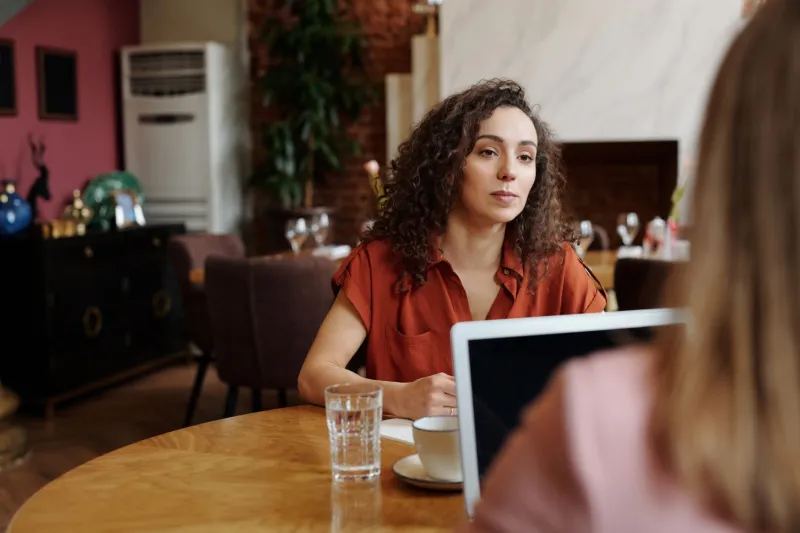
For remote workers who've landed back in their old neighborhood café, that overlap is loaded. You're working in the place that once paid you to work for it. The hierarchy has dissolved entirely. You're a customer now — a regular, maybe, if you play your cards right — and the relationship is rebuilt from scratch on completely different terms.
There's something clarifying about that. Something almost philosophical.
The Café That Adapted While You Were Gone
Here's the part that catches a lot of returnees off guard: the coffee shop changed too.
The pandemic reshaped café culture in ways that are still unfolding. Shops that once frowned on laptops — the kind of places with limited outlets and pointed signs about two-hour table limits — have quietly softened their stance in many markets. The work-from-anywhere generation didn't just want a place to sit; it needed one. And smart café owners noticed.
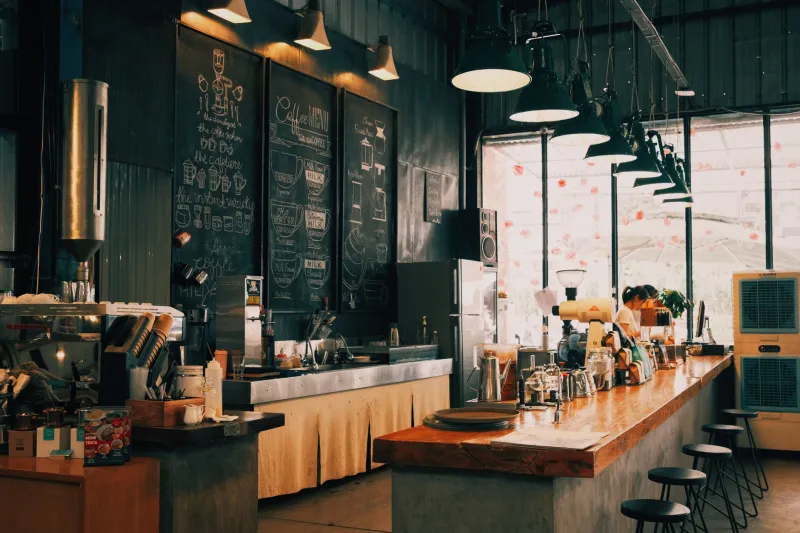
Across cities like Austin, Denver, Portland, and Brooklyn, a new generation of coffee shops has been designed explicitly around the hybrid worker. Better Wi-Fi. More outlets per square foot. Community tables that invite the kind of focused, ambient coexistence that makes a four-hour work session feel energizing rather than isolating. Some spots have even introduced dedicated "focus hours" in the morning and "social hours" in the afternoon — a kind of informal scheduling that mirrors the rhythms of remote work culture.
The café you used to work in may not have gone that far, but it's probably adapted in smaller ways. Maybe the music is a little quieter before noon. Maybe there's an unspoken understanding among the regulars about which tables are for working and which are for lingering. These micro-cultures develop organically, and they're part of what makes a neighborhood café genuinely irreplaceable — no co-working space has ever figured out how to bottle that particular atmosphere.
The Complicated Order as Personal Mythology
Let's talk about the drink for a second, because it matters.
When you worked here, you probably drank whatever was easiest to make quickly. A straight shot. A plain drip. Something you could pour with one hand while doing three other things. The drink of efficiency, not preference.
Now you order the complicated thing. The oat milk cortado with one pump of vanilla and a specific temperature request. The pour-over from the single-origin Ethiopian beans. The cold brew with a splash of something that requires a separate container.
This is not pretension. Or, okay, it's a little pretension, but it's also something more interesting. The complicated order is a declaration. It says: I have time now. I have preferences. I am someone who has thought about what I actually want and isn't afraid to ask for it. That's a different person than the one who used to work the morning rush. And ordering that drink, in this particular place, is a quiet way of announcing the update.
The barista — who almost certainly wasn't working here when you were — takes your order without ceremony, and that's exactly right. You don't need them to know your history. The space holds it for you.
What It Means to Outlast the Plan
There's a version of your life where the coffee shop was just a job. A means to an end. A line on a resume you eventually stopped mentioning.
And then there's the version where it turns out the coffee shop was something more structural — a place that taught you how to be present, how to read a room, how to make something well and hand it to another person and watch them be briefly, genuinely happy. Skills that turn out to be useful in ways you couldn't have anticipated when you were nineteen and exhausted and smelling permanently of espresso.
The career you thought would define you may have come and gone. The café is still there.
There's a specific kind of humility in sitting down at a table in a place that once employed you and realizing that it has outlasted your ambitions, your plans, and at least one version of your professional identity — and that somehow, this doesn't feel like defeat. It feels like arrival.
Your coffee is ready. They called your name. Go get it.
This is exactly where your story is supposed to be happening right now.